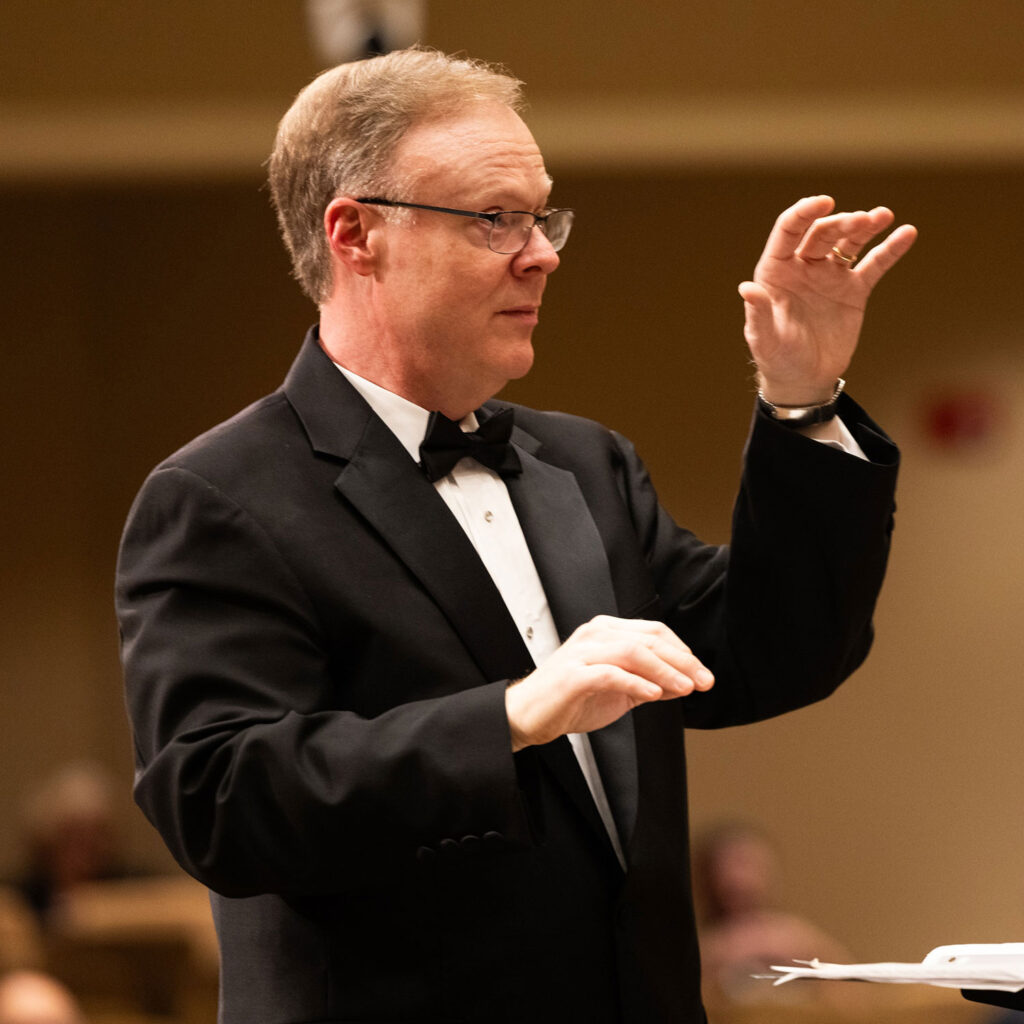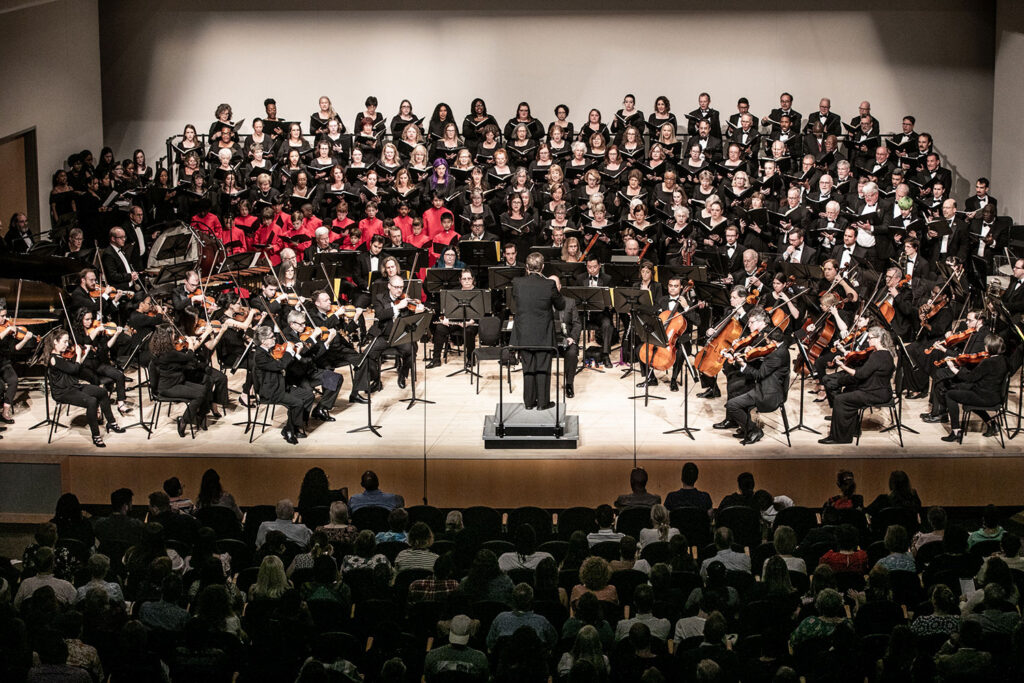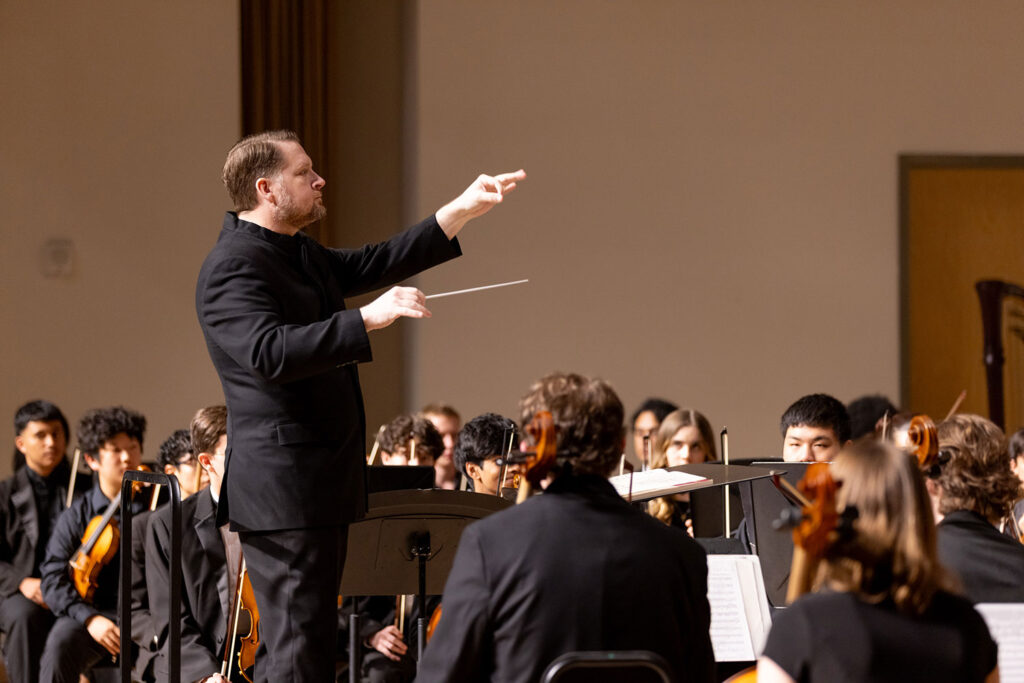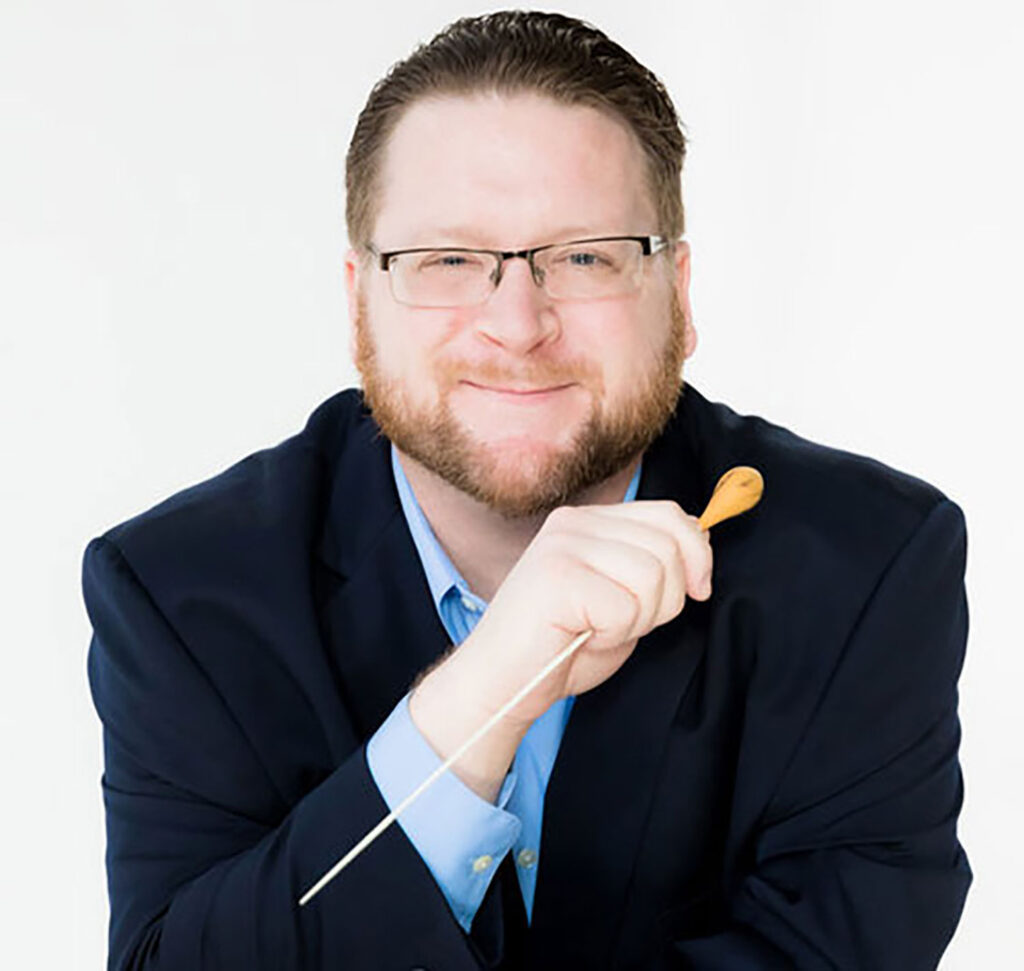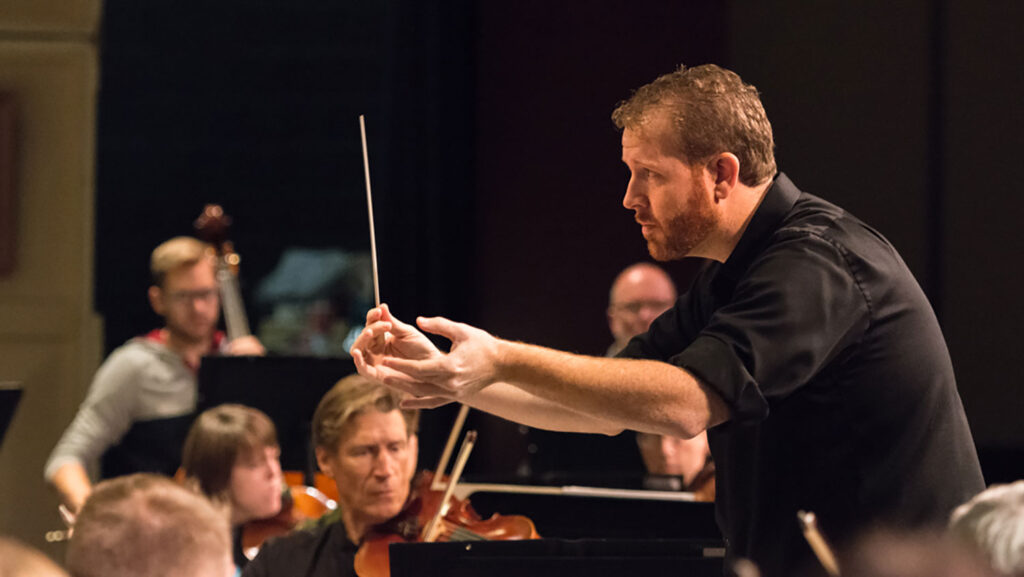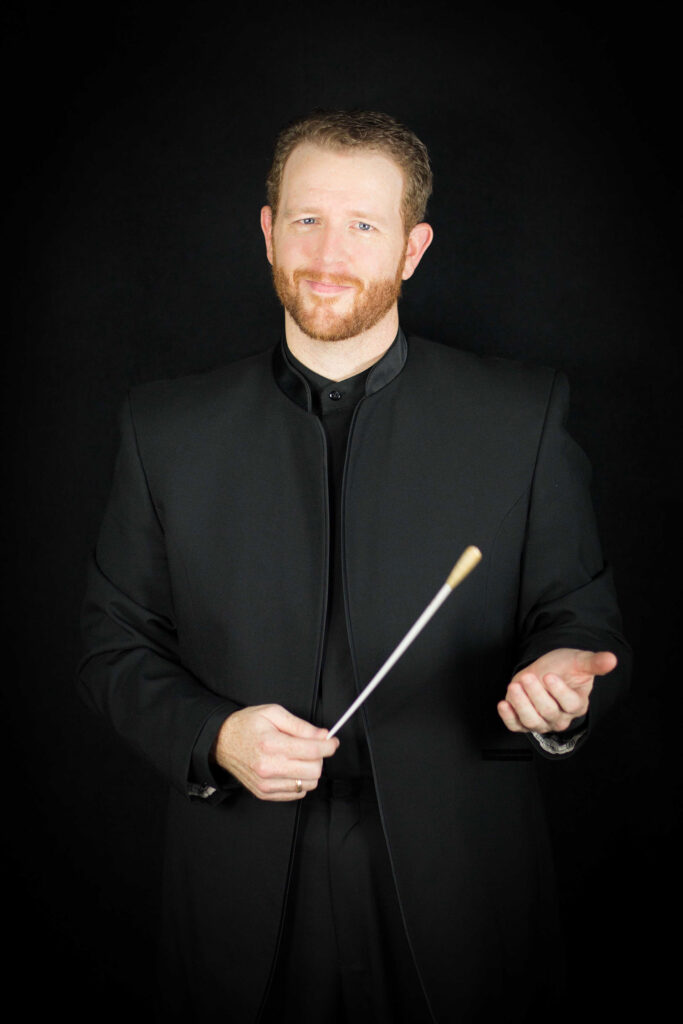

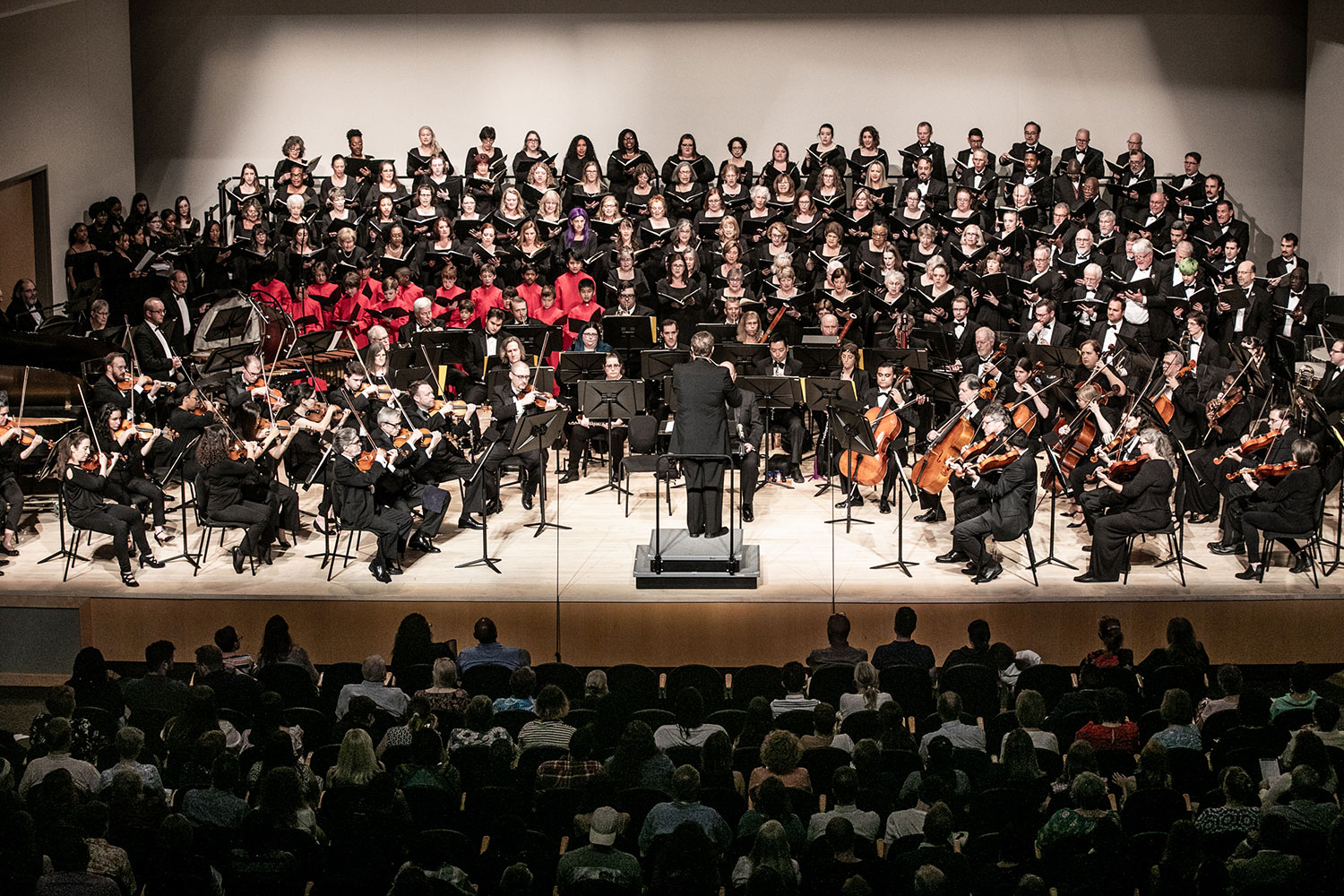
On May 23rd, 2026, the Georgia Symphony Orchestra will present its Season Finale Concert at Atlanta Symphony Hall. It is a way to say “Thank You” to the visionaries who began the organization 75 years ago as well as to the people who continue to support its mission. Guiding this celebration are three extraordinary conductors who each understand the gift that is GSO.
Dr. Timothy Verville, in his tenth year as music director, programmed the concert as a way to look back at the long history of the GSO organization. “A milestone like this is a time for reflections. I thought that taking a moment to look back and take stock of where we are, and how we got here was important. And the best way to do that is by featuring music we have performed throughout our history.” For Verville, the pieces he chose reflect the evolving nature of the symphony over the years. “I think they offer a portrait of who we are, and what we have achieved artistically.”
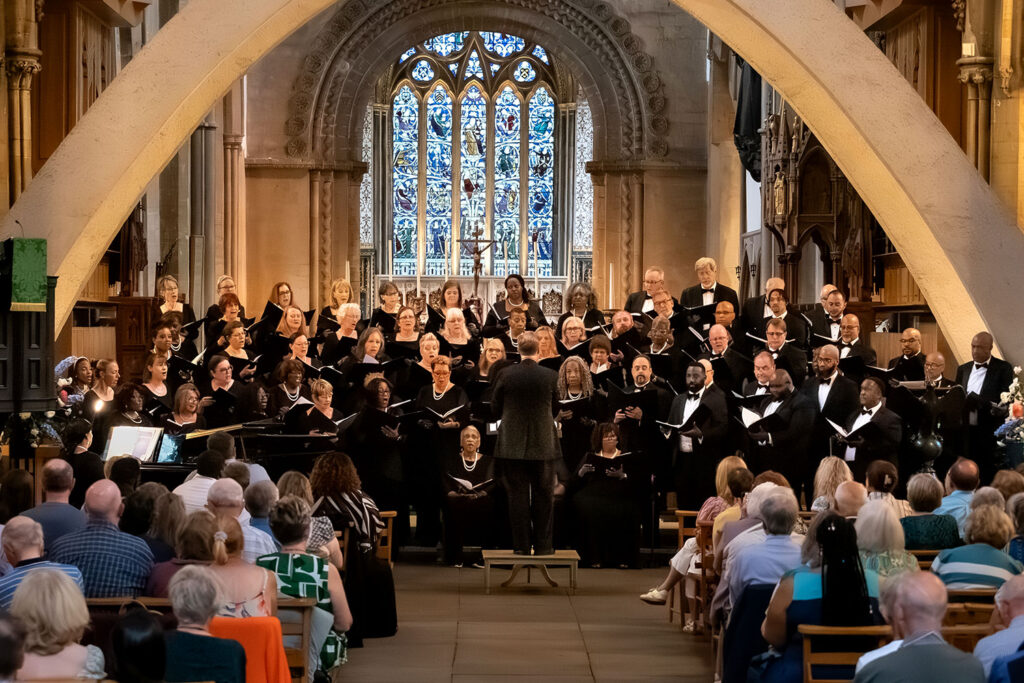
GSO Chorus conductor, Dr. Bryan Black is taking this opportunity to remember the original members of the GSO. “In the [GSO] office, they have the…charter of all the women who signed their names on that kitchen table 75 years ago. I feel very fortunate to have a living memory of some of those women who actually put pen to paper, and I really do feel deeply connected to them.”
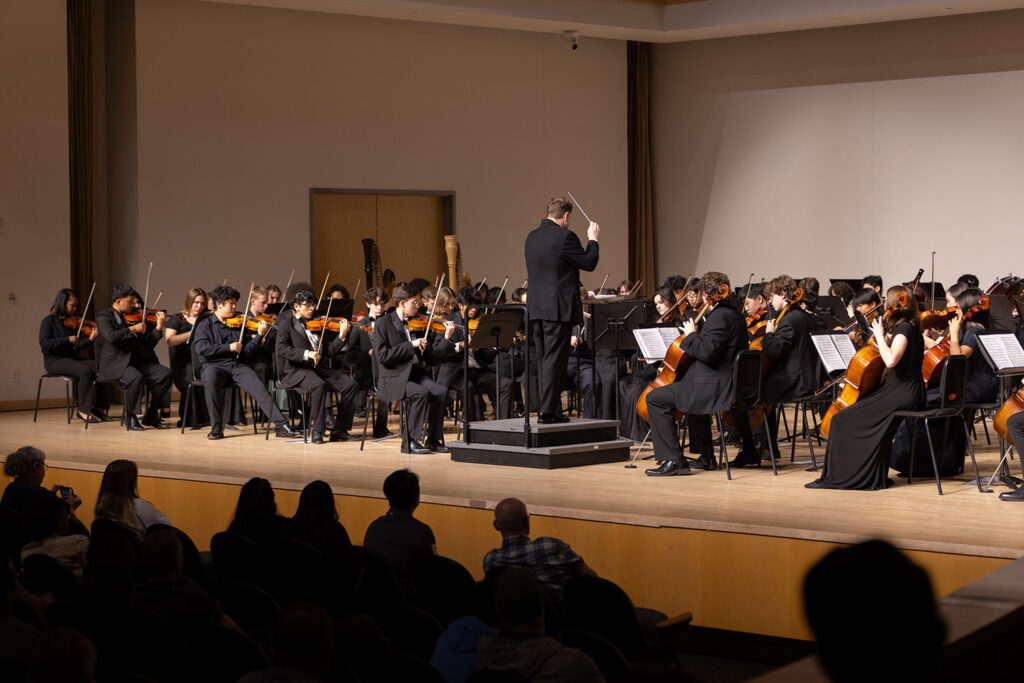
One of the many milestones GSO is celebrating this season is the twentieth anniversary of the Georgia Youth Symphony Orchestra (GYSO). GYSO’s conductor, Dr. Nathaniel Parker, recognizes the importance of GYSO in the larger GSO organization. “That GYSO has grown and thrived for 20 years is a testament to the value of the GYSO experience, one that offers opportunities for students of all technical levels.” GYSO is a unique organization which provides “valuable, meaningful learning experiences for students” of all ages. These students will have a unique experience with this concert. “The opportunity to sit next to professional musicians in performance offers [them] insight into that professional-level environment that few outside a professional orchestra ever get to experience.”
In addition to reflecting upon the history of GSO, Verville views this concert as an opportunity for the orchestra musicians to see “how far they have each come on their own individual musical journey.” For Black, this has special meaning. He had the honor of singing under famed choral conductor Robert Shaw in his last years with the Atlanta Symphony. Black sees Symphony Hall as “hallowed ground” for choral music. He said that Shaw’s influence is “in the air” there and considers this opportunity a “full-circle moment.”
This concert will also celebrate collaboration with other choral musicians in the Atlanta community. Verville stated, “We have a deep history of partnering with other arts organizations and are very excited to bring back our good friends from the Uzee Brown Society of Choraliers and the Georgia Spiritual Ensemble. And we are even more excited to have the Wendell P. Whalum Community Chorus joining us as well.” For Black, including these talented singers came from the relationships GSO has built with them. The GSO Chorus and the Uzee Brown Society of Choraliers have a partnership that has lasted for close to ten years. This concert continues that relationship.
What Verville, Parker and Black are creating for this celebration is a large community of musicians. That is a monumental task, but Verville and Parker agree that the preparation work doesn’t change with numbers. “The music preparation is the same whether it’s 40 performers or 400,” Verville said. Parker agrees. “The approach is really the same as we have for any concert.” Both Parker and Black emphasized the importance of each musician’s individual preparation. Parker expects that his students will do “50 percent” of their preparation on their own. Black concurred. “We do rely on people being independent learners,” citing the short timespan available to the chorus. Mahler’s Symphony No. 2 offers great challenges for singers and orchestra musicians. In return, Verville says it offers “Everything! Mahler has so much to say, and he does it in so many different ways.” The same can be said for Holst’s The Planets, a work that Parker’s students enjoy, making “the learning process easier.”
For all three conductors this concert is about community. For Parker, the growth and education of his GYSO students is essential to society at large. “It’s very important to me that music remain a living art form,” Parker said. This is what keeps music “relevant.” Black sees the GSO Chorus as a “civic organization.” Seeing strangers come together from all walks of life is his “strongest motivation” and keeps [him] energized. He is struck by the trust the individuals in the chorus have in one another. For Verville, “orchestras are service organizations” that are guided by their mission and vision. GSO’s supporters are key. As Verville stated, “while this performance is a celebration of the GSO, it’s also our way of saying ‘thank you’ for decades of helping us make our community a better, more artistically vibrant place to live.” Come join the celebration!
Marianne Holdzkom is a Professor of History at Kennesaw State University and a proud member of the GSO Chorus