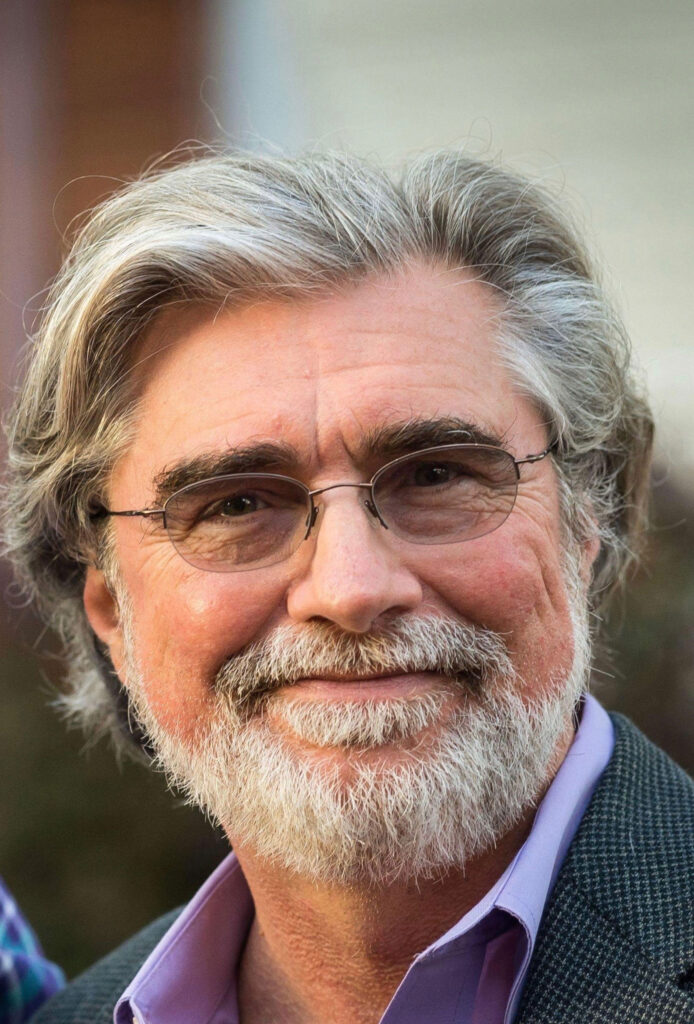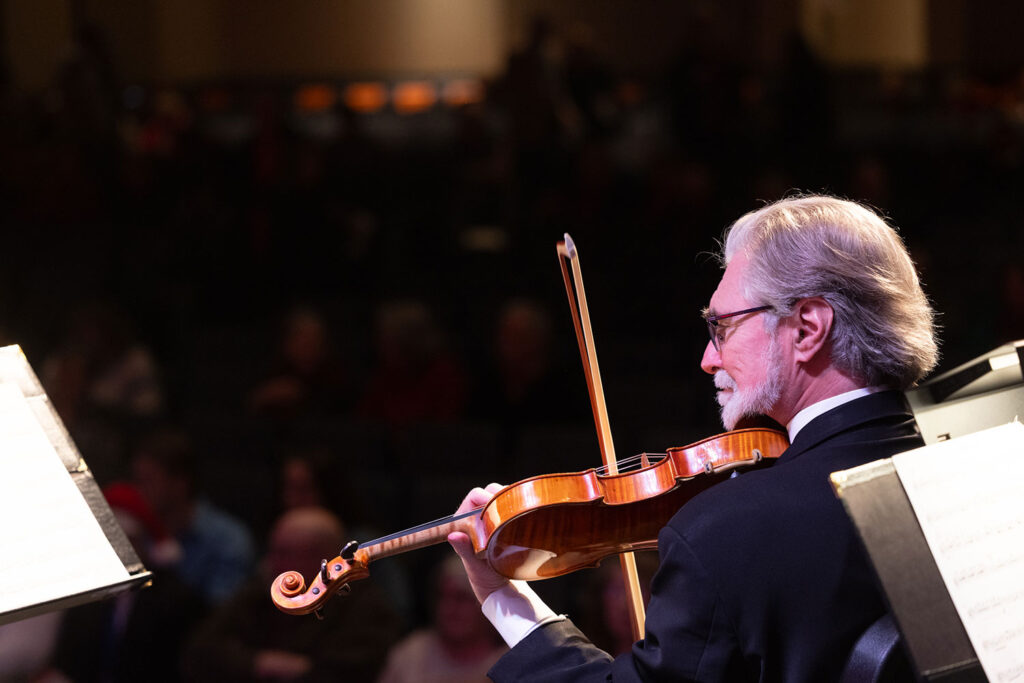

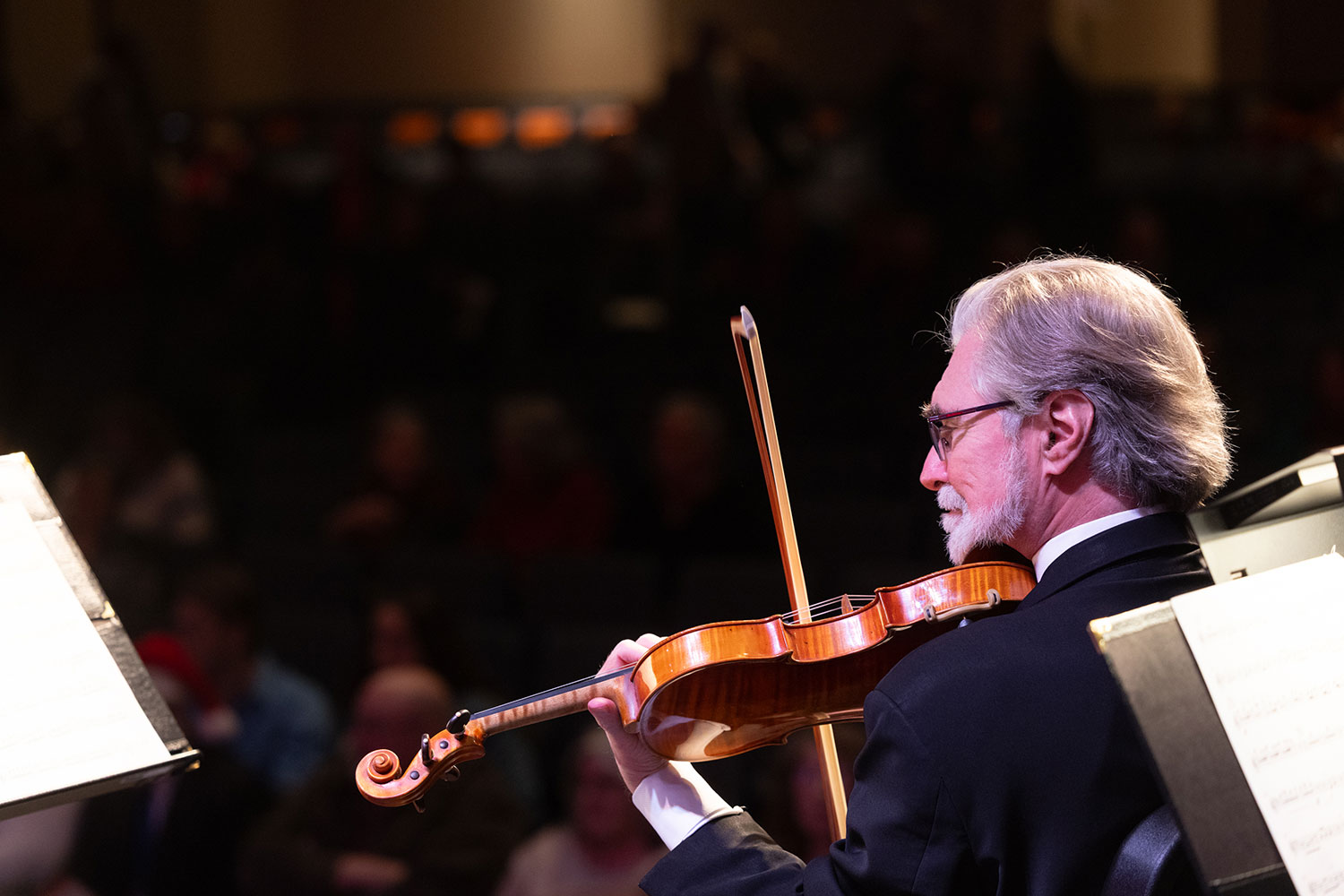
After more than two decades as Concertmaster of the Georgia Symphony Orchestra, Edward Eanes is retiring. Before he takes his final bow, he looked back on his years with the GSO — the mentors who shaped him, the night he watched from the audience instead of the stage, and one backstage story he’s never told before.
“I joined the GSO — the Cobb Symphony, as it was known then — in 1998. The orchestra had recently lost its previous concertmaster, and I was hired to serve out the remainder of the spring 1999 season. I immediately felt at home with the musicians and their collegial, welcoming attitude, and at the end of that season, they offered me a contract to stay on. Steven Byess was on the podium in those days. He was always respectful and courteous to the musicians, with a clear, precise baton technique that gave us the confidence to make music expressively.
The orchestra I joined isn’t the orchestra I’m leaving. The GSO has grown from a mostly volunteer community orchestra — with a few professional section leaders — into one with a large core of professional players and some truly talented volunteers alongside them. We’ve gone from a local community orchestra to a successful regional one, and along the way we’ve taken on some extremely challenging repertoire and pulled it off. Our audience base has only grown right along with us. It’s been exciting to watch.
I don’t think people outside the orchestra always understand what the concertmaster actually does. We’re the principal first violinist, seated in the first chair to the conductor’s left. We lead the tuning before a rehearsal or concert, and we’re the intermediary between the conductor and the musicians. One of the biggest parts of the job nobody sees from the audience is the bowings — deciding the direction of the bow, up or down, for every passage in the first violin part, which the other string principals then build on for their own sections. It creates uniformity in the sound, but it’s also this visual effect — all those bows moving in sync — that’s honestly really cool to watch from the house.
But it is a tremendous responsibility that goes beyond being prepared for rehearsals and performances. My attitude and my decisions can impact the overall atmosphere of rehearsals and the success of the orchestra’s performances. That’s not something you get to take lightly.
We’ve made so much wonderful music over the years. Give me anything by Shostakovich or Copland and I’m happy — two of the most significant composers of the last century, and their music is still so relevant today.
Two concerts stand out most for me. The first was my 20th season as concertmaster, in 2018, when Tim Verville asked if I wanted to play a solo. Instead of a solo concerto, I asked if we could program Rimsky-Korsakov’s Scheherazade instead — it has these iconic concertmaster solos I’d never gotten to perform, plus virtuosic writing for the whole orchestra. But honestly, one of the most memorable concerts of my whole time here is one I didn’t even play. I sat in the audience for it: GSO’s 75th Anniversary performance this past May at Woodruff Arts Center.. The orchestra sounded fantastic, and the excerpts from Mahler’s Symphony No. 2 blew me away. I was so proud to be part of this organization that night.
Not every memory from this job is serious though. I once had a ‘wardrobe malfunction’ with my tuxedo pants while I was waiting in the wings for my cue to walk onstage before a concert. It was funny, but scary in the moment! Thankfully the conductor had had the exact same problem before and knew just how to fix it.
I’ve had the good fortune of playing alongside some remarkable people. Principal cellist David Lloyd was already here when I joined back in 1998, and I’ve always been impressed by the intensity and passion of his solo playing, and his congenial professionalism besides. Harpist Julie Albertson is a joy to work with — her playing has both virility and elegance. Timpanist John Lawless is a consummate musician, colleague, and human being. I’m grateful I got to work closely with our Associate Concertmaster, Robert Givens, whose technical precision and steadfast musicianship have always been an inspiration to me. And I’ve loved getting to watch Maestro Tim Verville’s vision for this orchestra take shape.
But if I’m honest, what I’ve enjoyed most isn’t any single piece. It’s the camaraderie and the joy of everyone involved in this place — the musicians, the leaders, the wonderful staff in the GSO office.
As for what’s next: a slower pace of life. Relaxation, or at least learning how to relax. And I’m finally going on my first cruise.
If I could say one thing to whoever takes this chair after me, it’s this: don’t forget that the concertmaster role is an awesome responsibility and a service to the organization. And as tempting as it can be, don’t make it about yourself.
Thank you from the bottom of my heart — to the musicians, the patrons, the volunteers, and this whole community who shared this journey with me. I will never forget this experience.”