
© 2025 Georgia Symphony Orchestra
Take a moment now to ensure your device is in silent mode.
Please note: Videography and Photography are not permitted during the concert.
Thank you and enjoy the performance!
The GSO Shop
Click the images below to browse great items!


Want to win a pair of tickets to a future GSO Performance?
Fill out our 3 minute audience survey for a chance to win 2 tickets to a future GSO concert.
Program Guide Contents
Georgia Symphony Orchestra Upcoming Events
- Georgia Symphony Upcoming Events
- Sponsors and Supporters
- Administration, Artistic Staff, and Board
- About the Organization
- Timothy Verville, Music Director and Conductor
- Nathaniel F. Parker, Associate Conductor and Dr. Bobbie Bailey GYSO Artistic Director
- Bryan Black, JG Morgan Chorus Director
- Orchestra Personnel
- Georgia Symphony Orchestra Chorus
- Program & Program Notes
It is through the sustained generosity of our supporters that the Georgia Symphony Orchestra is able to continue delivering quality enrichment, entertainment and education throughout our community and greater region, encompassing music and arts lovers of all ages.
Our growing list of programs supports a wide range of needs in the community. Just a small sampling of the diverse options includes young musician education, inclusiveness in the concert hall, veterans’ support, free and affordable concert tickets, community presentations, and collaborative promotion of other outstanding nonprofit organizations.
Combining your giving with a musically infused GSO program doubles your impact in the community. Donating to the GSO is easy. Visit us at georgiasymphony.org/donate. Or call 770-615-2908.
Special Thanks to the Bobbie Bailey Foundation
for their gift of a $1 Million Dollar Endowment Fund
The GSO is sincerely grateful for the substantial support of our youth education program given by:
The Georgia Symphony Orchestra is Supported by









Gold Baton Circle $15,000-$24,999
Georgia Council for the Arts
The Imlay Foundation
Silver Baton Circle $10,000-$14,999
Bob and Linda Bonstein
Kimberly Gresh
Susan Traendly
Bronze Baton Circle $5,000-$9,999
Community Foundation for Greater Atlanta
Greystone Power
Mary Kay Howard
McMaster-Carr Supply
John and Shirley Morgan
Publix Supermarkets
Bruce and Pam Rhyne
Walton Communities
Jeff and Rose Whittingham
Conductor’s Circle $2,500-$4,999
Chris Clark
Cobb EMC Community Foundation
Indian Hills Country Club
Michael and Pauline Knowles
Marietta Kiwanis Club
Tutt and Debra McCracken
Valencia McCrimmon
Gregory and Christine Mishkin
Randy and Judy Ribarsky
Sydney Trew
Len and Cristy Van Popering
The Vaughn Foundation
Principal Circle $1,000-$2,499
Anonymous
Anonymous
Sandra Barclay*
Daniel Barker
Bright Wings
Marilyn Brooks
Regina Brown*
Dr. Bruce Gillett
Chris and Lisa Greenwood
Bryan Lew Henry, Jr.
Lee and Gail Herring
Rebecca Higgins
Ann Hixson
Mariann Holdzkom
John and Barbara Howell*
Sally Jobe
Kimberly Clark Foundation
Berna and Noah Levine
The Manely Firm
Lydia Mayes
Joanne Mazula*
Valencia McCrimmon
Mighty Cause Foundation
North Cobb Rotary
Foster and Bliss Peterson*
Carlo Purefoy
Robert Kent Galleries
Ronna Ruppelt
Robert Schull
Baker and Debby Smith
David and R. J. Starnes
Erica Stein
Adam and Mallory Stensland
Alan and Susan Stensland
Wahid Tawfik
Jeffrey and Louise Tharp
Richard and Pollyann Thompson
Tom and Susan Tillery*
Patricia Torres
Jeffrey and Suzanne Tucker
Rebecca Strojan Weaver
Todd Youngblood
Musicians Circle $500-$999
Anonymous
Anonymous
Dane Bamburry
David and Leta Barry
Barbara Anne Bennett
Cindy and Henry Bohn
William and Kim Dyer
Frank Harris
Nancy Hodges
Wendy Lerner
Regina Malloy
Yvonne and Michael Perrino
Carlo Purefoy
Dwight Shoemaker Family
Lily WhiteRose
Wallace Ziprik
Concertmaster Circle $250-$499
Alenia Baxter
Judith F. (Judy) Bullard
Buddy and Lillian Darden
James and Terry Dubsky
Stephen Hall
Clifford McCune
Gil Moor
Vijay & Carolyn Srinivasan
Gerry Stephens Jr
Burt and Sharon Stills
Prelude Circle $100-$249
Anonymous
Anonymous
Anonymous
Janet Adams
Jordan Bonar
Kim Bonstein
Katherine and James Chester
Beth Collier
Katherine Dater
Monica Fambrough
Joe Ferst
Barbara Hammond
Annie Harris-Gunter
Carlyn and Ron Krieger
Emily Lembeck
Dennis Loubiere and Edward Eanes
Beverly Martin
Margaret Menz
Lee and Sandra Miller
Wei Money Family
Martha Moore
Bill and Sara Needs
Mary Nimsgern
Jane Redwine
Janelle Runge
Mark Schilke
Peter and Marian Sebel
Veronica Smith
Eric Swanson
Jo Tucker
Laurie Washington
Ovation Circle $50-$99
Anonymous
Anonymous
Anonymous
Kelley Clark
Fran Crawford
Jacqueline and Robert Downing
Ruth Einstein
Natalya Fainberg
Camille Fairbanks
Jonathan Gallant
Tera Gordon
Sandy Hsieh
Cindy Johnson
Grace Johnson
Nick Johnson
Darron Kendrick
Wiley Kendrick
Kristi Ledford
Lauren Abraham Mahoney
Russell Marshall
Karen Milchus
Nancy and Gordon O’Neill
Jason Ontjes
Eddie Rogers
Marnell Saunders
Marshall and Patty Smitherman
Gary Thomas
Paul Tompkins
Ken Sabo
Dr. Cyndy Stephens
Topaz Wong
In-Kind Supporters
ARTS of Cobb
Atlanta Marriott Northwest at the Galleria Hotel
Carriage House Catering
Chris Savas Photography
Cobb Travel and Tourism
Frank Harris Law
Gift of Music Foundation
Moore Colson CPAs and Advisors
Kathryn Smith
Adam Stensland
Timothy Verville

Daniel Barker
Chandra Brown
James Dubsky
Barbara Hammond
Marianne Holdzkom
Mary Kay Howard
Michael and Pauline Knowles
Dennis Loubiere
Tutt and Debra McCracken
Jeffrey & Suzanne Tucker
Jeff and Rose Whittingham
In Memoriam
Allan Cheshire in memory of Susan Cheshire
Brenda Rhodes in memory of Joanna Cox
Debra McCracken in memory of Frances M. Keith
Debra McCracken in memory of Joanna Cox
Eileen Paulin in memory of Jeff Kotzan
Frank Harris in memory of Polly Anna Harris
Grace Johnson in memory of Frances M. Keith
Jeff and Rose Whittingham in memory of their parents
Joseph Yorio in memory of JoAnn Mary Yorio
Linda Acevedo in memory of Jeff Kotzan
Mary Kay Howard in memory of the Grandfather of Sydney Trew
Ron & Staci Martinez in memory of Frances M. Keith
Sharon Stills in memory of Helen Mackey, Theresa Ireland, Betty Knautz, Sylvia Peters
Susan Stensland in memory of Joanna Cox
Tish Fricks in memory of Jennifer Whitley
In Honorarium
Alenia Baxter in honor of Mary Kay Howard and Susan Traendly
Annonymous in honor of Kate Pfirman
Barbara Hammond in honor of Susan Stensland
Belisa Urbina in honor of Stephen Hall
Brenda Rhodes in honor of Susan Stensland
Brendan Knoblauch in honor of Mary Kay Howard
Dane Bamburry in honor of Valencia McCrimmon
Emily Lembeck in honor of Debbie McCracken
George Darden in honor of Amy and Bryan Black
Ira Pittman in honor of Suzanne Tucker
Jane McGuigan in honor of Mary Kay Howard
Joan Harrell in honor of Susan Stensland
John Morgan in support of Bryan Black, JG Morgan Choral Director
Katherine Dater in honor of Mary Kay Howard
Kim Bonstein in honor of Linda and Bob Bonstein
Kristen Bonstein in honor of Bob and Linda Bonstein
Linda Moore Connor in honor of Timothy Verville
Marian Sebel in honor of Bryan Black
Marie Boatright in honor of Mary Kay Howard
Martha and Dennis Moore in honor of Susan Stensland
Mary Argent in honor of Mary Kay Howard
Nancy O’Neill in honor of Bob and Linda Bonstein
Noah Levine in honor of the GSO Chorus
Valencia McCrimmon to the Julie Whitehead Memorial Library
Paula & Grainger Morrison in honor of Frank Harris & Abby Avery
Phillip O’Brien and Allison Fichter in honor of John and Linda Cooke
Rhea Pridgen in honor of Linda Cooke
Sharon Stills in honor of Susan Stensland
Richard and Pollyann Thompson in memoy of Margaret Curry
Susan Traendly in honor of Beth Johnson
Susan Traendly in honor of Mary Kay Howard
Susan Traendly in honor of Pat Torres
Sydney Trew in honor of Susan Stensland and Mary Kay Howard

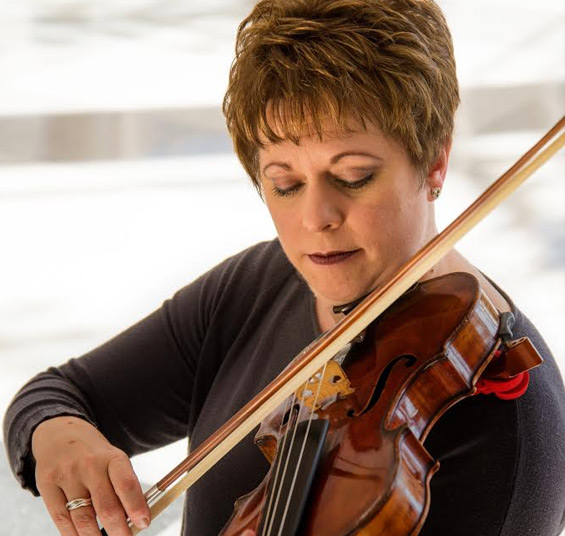
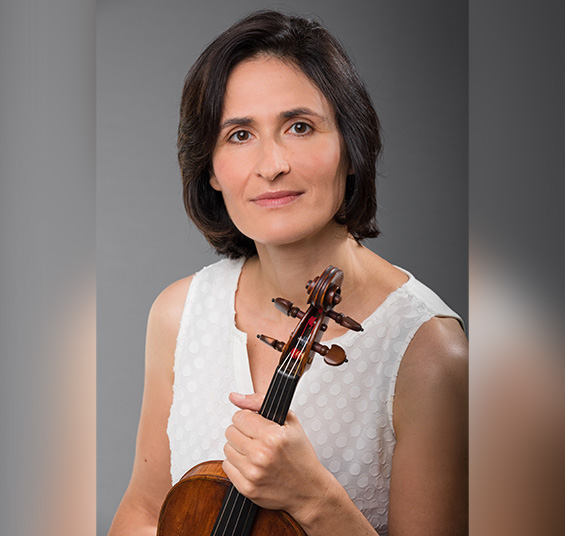
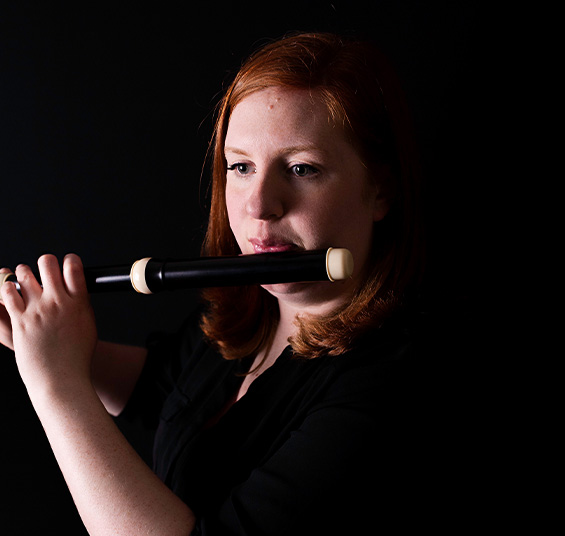
Administration
Madison Willits
Artistic Operations Manager
Ann Stoskopf
Business & Patron Manager
Artistic Staff
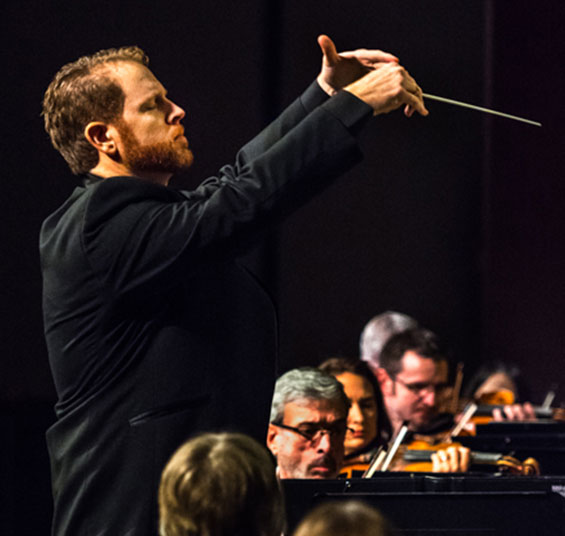
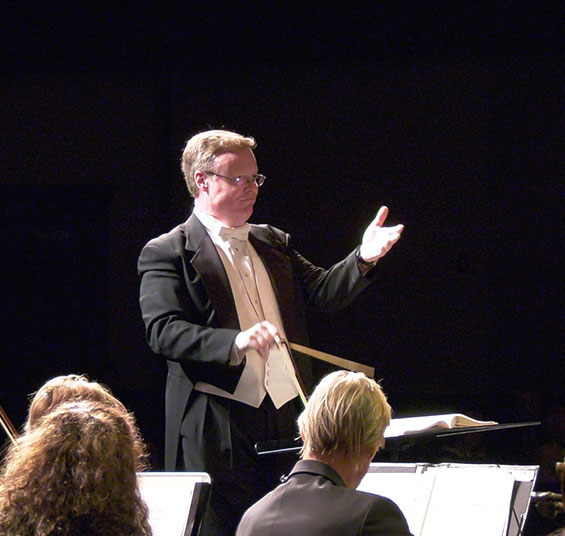
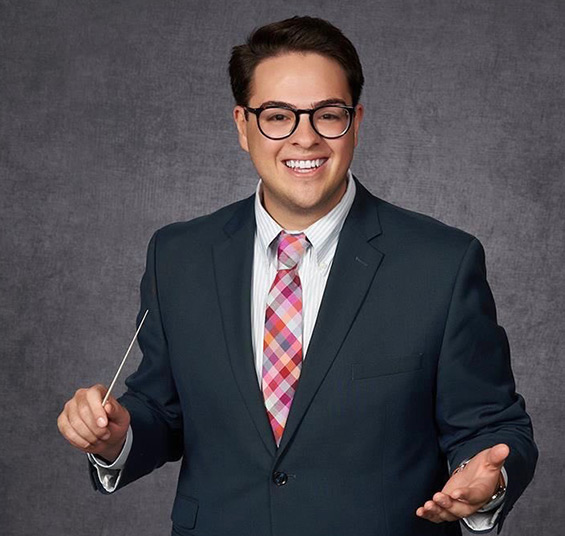
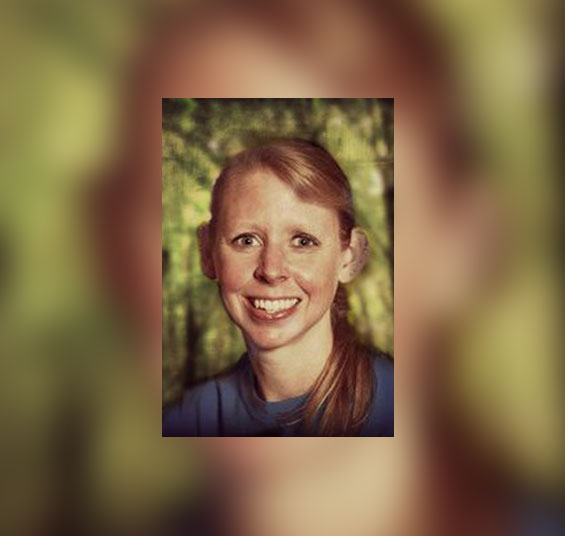
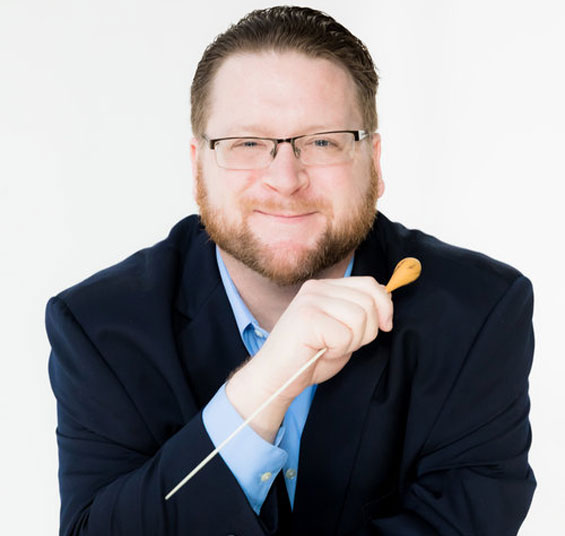 Nathaniel F. Parker
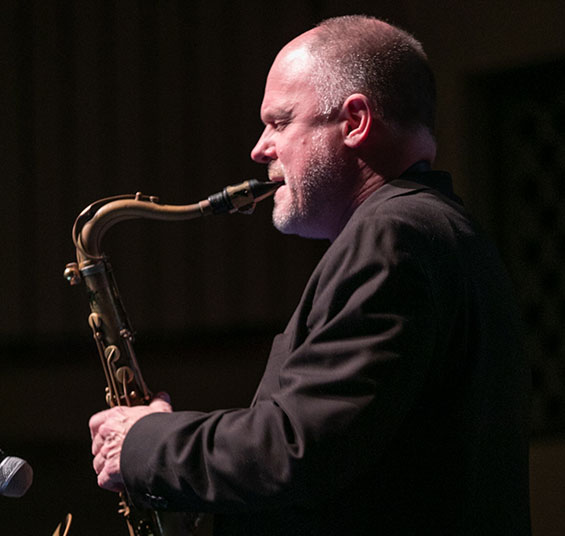
Board of Directors
For information about joining our Board of Directors or Advisory Board, please click here.
Rebecca Strojan Weaver, Chair
Collective Insights
Pamela Hubby, Vice Chair
ArtsBridge, retired
Sydney Trew, Treasurer
Moore Colson
Adam Stensland, Secretary
pwc
Len Van Popering
Applause Innovation Group, LLC
Bob Bonstein, Past Chair
Cotivity, Retired
Debbie McCracken
Marietta City Schools, retired
Michael Knowles, Past Chair
Fifth Third Bank
Ronna Ruppelt
Freeman Mathis & Gary, LLP
Frank Harris
Frank Harris Law
Erica Stein
KPMG
Lew Henry
Mauldin & Jenkins
Kathryn Smith
Walton Birch
Greg Mishkin
Escalent
Advisory Board
Jim Glover
Harry Norman Realtors
Susan Stensland
Past Executive Director GSO
Dr. Jeffrey Tharp
Wellstar Medical Group
Patricia Torres
Ret. Development Director GSO
Amy Drabant
Atlanta Design Solutions
KSU Interns
Gustavo De la Torre Martinez | Allen Yun | Eduardo Maduro | Allie King
MPAC Interns
John Stagmeier | Ellis Dill
GYSO Jazz! Intern
Evan Skrip
GSO Chorus Site Coordinator
Simri Martinez Chantaca
GSO/GYSO Library Intern
Alyssa McBride
About Us
Founded in 1951, the Georgia Symphony Orchestra has engaged audiences through imaginative programming, visionary leadership, and critically acclaimed performances.
Our Mission
The mission of the Georgia Symphony Orchestra is to break down access barriers to ensure that the transformative power of music serves all members of our community. The GSO enriches lives and creates impact far beyond the concert hall through innovative and engaging performances, world-class educational programs, and intentional community engagement.
Our Vision
Our vision is to be the cultural heartbeat of our community. We envision a world where every voice resonates, is celebrated and is valued through the unique power of music.
Our Values
We value high quality musical performances and we prioritize quality musicianship in our productions.
We value the accessibility of our programs to the community, we prioritize making venues, times, and cost fit the needs of the community, and we make sure no one will be left behind.
We embrace diversity and innovation in our programming to inspire the widest possible audience with our musical experiences.
We value the importance of volunteers across our organization.
We value the support of our donors and audience members and continually manage our resources effectively and efficiently.
We recognize the vital contributions of our musicians and educators and we strive to maintain relationships that create a positive environment for all.
We strive to provide a variety of high-quality musical education opportunities for youth and for life-long learning.

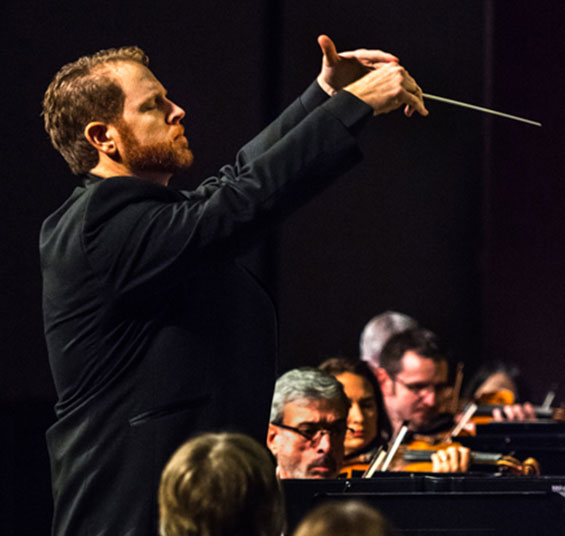
Timothy Verville
Music Director & Conductor
Born in western Oklahoma, Timothy Verville, an award-winning conductor and composer, spent his early years far from concert halls, growing up on a farm where his family raised and trained show horses. Eventually moving to “the city,” he was first exposed to music education in public schools. This ignited his journey of musical discovery and excellence, propelling him to stages and acclaim worldwide.
Verville is a uniquely multifaceted conductor in the modern orchestral sphere. His creativity, innovation, and dedication to sharing the power of the arts result in performances that captivate audiences. His work is described as “awe-inspiring” and credited for “bringing down the house” by the Atlanta Arts Scene. He is praised for his “finely focused conducting (in which) the pace of the music never sagged” by The Tulsa World.
Internationally, Verville conducted the inaugural Kyushu International Festival in Japan and has appeared with the Kyushu Symphony Orchestra, the Far Eastern Symphony in Russia, Opera Panama and the National Symphony Orchestra of Panama. In the U.S., his appearances include the Richmond Symphony Orchestra, Tucson Symphony Orchestra, West Virginia Symphony Orchestra, and many others.
Since 2016, as Music Director and Conductor of the Georgia Symphony Orchestra, Verville has fostered significant growth in the organization. His focus on audience engagement and outreach has been recognized in the community. In 2023, the Georgia Secretary of State proclaimed him an Outstanding Georgia Citizen for his service.
Under his visionary leadership, the Georgia Symphony has expanded its reach and built bridges to underrepresented populations. Collaborating with Girls Who Conduct, he created a fellowship for women conductors. He also partnered with Make a Wish Georgia to fulfill a young person’s dream of conducting an orchestra, and designed sensory-friendly concerts supported by the National Endowment for the Arts.
From 2010 to 2017, Verville served as the founding Artistic Director and Conductor of Arizona Pro Arte, leading to exponential growth in the organization. He established a full classics season, a summer series, educational performances, a chamber music program, and a dance ensemble.
Verville’s long-standing relationship with the Boston Chamber Orchestra included roles as Associate Conductor and Principal Guest Conductor. Additional previous engagements include Music Director and Conductor of the North Valley Chamber Orchestra (AZ), Scottsdale Baroque Orchestra (AZ), and Conductor of the Pollard Theatre (OK).
An award winner in the American Prize for Orchestral Performance as well as in Composition, his writing style encompasses a wide range of output. Recent premieres include the genre-blending “Liminal: an Atlanta Concerto for Amplified Looping Cello and Orchestra” with Okorie “OkCello” Johnson, and his upcoming “Requiem Americano.”
Verville was mentored by esteemed conductors Bruce Hangen, Timothy Russell, and James DePreist. He studied in masterclasses with David Effron, Markand Thakar, and Neil Varon. At the renowned Monteux School and Music Festival, he was selected as an orchestral assistant while studying with Michael Jinbo. Verville earned degrees in music from the Boston Conservatory, the University of Oklahoma, and Arizona State University.
He resides in Georgia with his wife and children.
Nathaniel F. Parker
GYSO Flute Choir Director
A talented and versatile musician, Nathaniel F. Parker has conducted orchestras in the United States, Peru, Russia, Poland, England, and the Czech Republic. Equally at home working with professionals and training future generations of musicians, Dr. Parker is Director of Orchestral Studies at the Kennesaw State University School of Music—serving as Music Director and Conductor of the Kennesaw State University Symphony Orchestra and Conductor of the Kennesaw State University Opera Program—and Associate Conductor of the Georgia Symphony Orchestra. His recent guest conducting engagements include appearances with the Jackson Symphony Orchestra (Michigan), the Connecticut Music Educators Association (CMEA) All-State Orchestra, the Fulton County High School Honor Orchestra (Georgia), and the Georgia Music Educators Association (GMEA) District 9 High School Honor Orchestra.
Dr. Parker is the recipient of numerous honors, awards, and scholarships. He was named a finalist for a Conducting Fellowship with the New World Symphony, a semi-finalist for a Conducting Fellowship at Tanglewood, and a Candidate for the Respighi Prize in Conducting; he also received a Citation of Excellence in Teaching from the Pennsylvania Music Educators Association. An active scholar, Dr. Parker’s writings have been published by the Conductors Guild and the College Orchestra Directors Association (CODA). He has presented research at the College Orchestra Directors Association’s national and international conferences and is Editor of the Journal of the Conductors Guild.
Dr. Parker has served as Music Director and Conductor of the Concert Orchestra and faculty at New England Music Camp (Maine), and Interim Music Director and Conductor of the Georgia Youth Symphony Orchestra’s (GYSO) Symphony and Camerata orchestras. Before relocating to Georgia, he was Director of Orchestral Activities and Assistant Professor of Music at Marywood University (Pennsylvania) where he was Music Director and Conductor of the Marywood University Orchestra and taught courses in conducting, instrumental methods, musicology, and analytical techniques. Other previous positions include Associate Conductor and Production Manager of the Jackson Symphony Orchestra (Michigan), Music Director and Conductor of the Jackson Youth Symphony Orchestra, Director of the Jackson Symphony Orchestra Community Music School, Graduate Conducting Intern at Michigan State University, Music Director and Conductor of the Mason Orchestral Society’s Community Orchestra and Youth Symphony (Michigan), Assistant Director of Music at Xaverian High School (New York), Conductor of the New Music Festival of Sandusky Orchestra (Ohio), and Graduate Assistant Conductor and Teaching Assistant at Bowling Green State University (Ohio).
Parker earned a Doctor of Musical Arts in Orchestral Conducting from Michigan State University, where his primary instructors were Leon Gregorian and Raphael Jiménez. During his time at MSU he regularly appeared with all the university orchestras and focused his doctoral research on Leonard Bernstein, specifically the composer’s Symphony No. 2, “The Age of Anxiety.” He earned a Master of Music in Orchestral Conducting from Bowling Green State University, where he studied with Emily Freeman Brown. His other conducting mentors include Stephen Osmond, Gary W. Hill, and Timothy Russell. In addition to his training in academia, Dr. Parker participated in numerous conducting master classes and workshops, conducting orchestras under the tutelage of nationally and internationally renowned conductors and conducting pedagogues including Christoph Eschenbach, George Hurst, Arthur Fagen, Markand Thakar, Mark Gibson, David Itkin, and Paul Vermel. Parker began his collegiate education at Arizona State University, where he studied bassoon with Jeffrey G. Lyman and graduated magna cum laude with a Bachelor of Music in Bassoon Performance.
Nat resides in Kennesaw with his wife, Melody, their son, Jacob, and their dog, Sammy.
For more information, please visit www.nathanielfparker.com
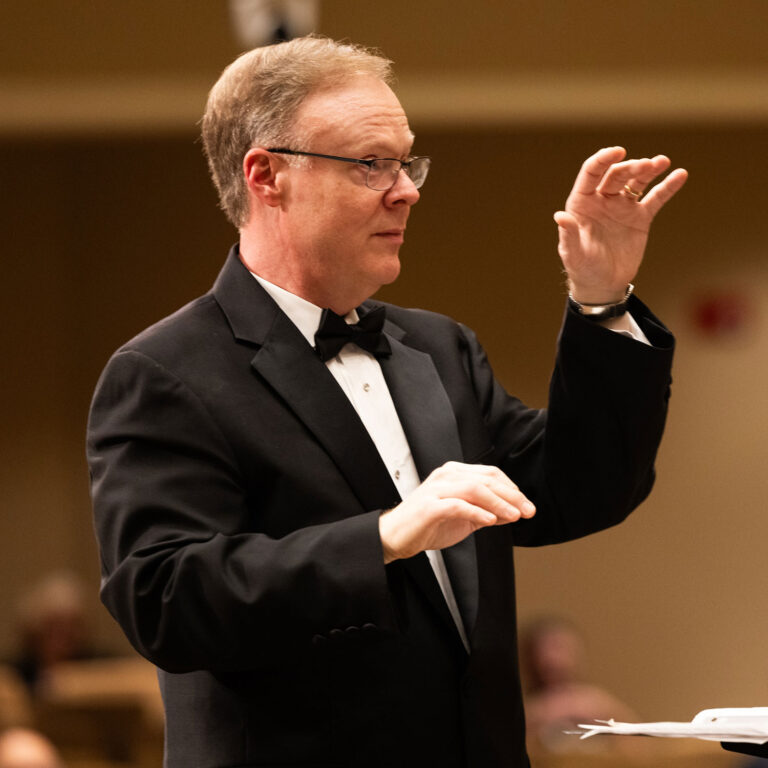
Bryan Black
JG Morgan GSO Chorus Director
Bryan Black is the founding conductor of the Georgia Symphony Orchestra Chorus which he established in 2007. The hundred-voice Chorus has performed masterworks such as Orff’s Carmina Burana, Beethoven’s Ninth Symphony, Poulenc’s Gloria, Bach’s Magnificat, Walton’s Belshazzar’s Feast, Vaughan-William’s Sea Symphony, and the Georgia premier of William Grant Still’s And They Lynched Him On A Tree. Other concerts have featured notable choral repertoire including Corigliano’s Fern Hill, Handel’s Let God Arise, and Robert Ray’s Gospel Mass. The chorus made its first international tour to Spain in 2012 under his direction and toured the United Kingdom in 2025 with the Uzee Brown Society of Choraliers.
Black has been active in the broader music community for three decades and was recognized as a “Lexus Leader in the Arts” by Atlanta Public Broadcasting in 2003. After a collaborative performance of Hugo Distler’s Totentanz in 2004, Bryan was awarded a cultural ambassadorship from the Atlanta Goethe-Institut and attended an advanced language symposium in Weimar, Germany. He sang for several years with the ASO Chorus and Chamber Chorus, including Robert Shaw’s final performance of Bach’s B-minor Mass in Carnegie Hall. He also taught on the adjunct faculty of Georgia State University and was visiting conductor for the Candler School of Theology Choraliers at Emory University. Choirs led by Black have performed at the Vatican, Christ Church Cathedral (Oxford), the Piccolo Spoleto Festival in Charleston, and on tours to Germany, Italy, the Czech Republic, and Norway.
Bryan is past-president of Georgia ACDA (American Choral Director’s Association) and served six terms at the divisional and national levels as Resource and Repertoire coordinator for reading sessions and conference performances. While serving ACDA, he assisted John Rutter as organizer for a conductor’s honor chorus in 2013 and planned the national 2019 “Music in Worship” event featuring Jason Max Ferdinand and the Aeolians. He has contributed articles to the Choral Journal, the Canterbury Dictionary of Hymnology, and Tim Sharp’s Sacred Choral Music Repertoire (pub. GIA) reflecting his work as a practicing church musician since the age of seventeen. Black currently serves as organist / choirmaster at St. James Episcopal Church on the historic square in Marietta, Georgia.
Bryan holds a certificate in German as a foreign language (Goethe-Institut Berlin), a BM degree in organ (Samford University), and an MM degree in choral conducting from The Florida State University where he studied with Rodney Eichenberger and André Thomas. His doctoral thesis (DPM, Southern Methodist University) considered the impact of choral music in a maximum-security women’s prison and how the inmates’ lived experience of musicking models resilient community in an age of technological acceleration and relational isolation.
Georgia Symphony Orchestra Personnel
Violin 1
Edward Eanes,* Concertmaster
The Teresa Eubanks Ireland Chair
Robert Givens, Associate Principal
The Marnie R. Gresh Chair
Melody Bearden
Kerren Berz
Mary Burndrett
James Cobb
Talia Coopersmith
Amber Dobbs
Heather Hart
Gilyoung Kang
Aeden O’Shields
Kelly Thomas
Hae Jin Yoo
Violin 2
Yi-Wen Yeh*
Colin Cassell
Evelyn Champion
Beth Collier
David Edwards
Amanda Esposito
Grace Kawamura
Ryan Lavender
Lauren Miller
Monika Ramnarayan
Patrick Ryan
Jennifer Sersaw
Ehsan Sheikholharam
Jill Stokes
Tina Yu
Viola
Meghan Yost*
Christina Esposito
Eric Johnson
Mary Koves
Kyle Mayes
Dave Miller
Greg Selig
Heather Vincenty
Blake Wright
Cello
David Lloyd*
Jennifer Davenport
Megan Deason
Rachel Halverson
Wesley Holmes
John Howell
Natallia Isabel
Julienne Kung
Nirav Patel
Stephanie Peterson
Michael Roberts
Dwayne Wasson
Double Bass
Robert Goin *
The Mary Kay Howard Chair
Chris Bussert
Leonardo Lopes
Rob Lysse
Maximilian Simmons
Moe Winograd
* denotes section principal
Flute
Jeanne Carere*
Frankie Cavanah
Piccolo
Dana Meyer
Oboe
Christina Gavin*
Alexander Zhang
Clarinet
Justin Stanley*
Theresa Stephens
Bass Clarinet
Daniel Barker*
John Warren
Bassoon
Marissa Takaki*
Nib McKenney
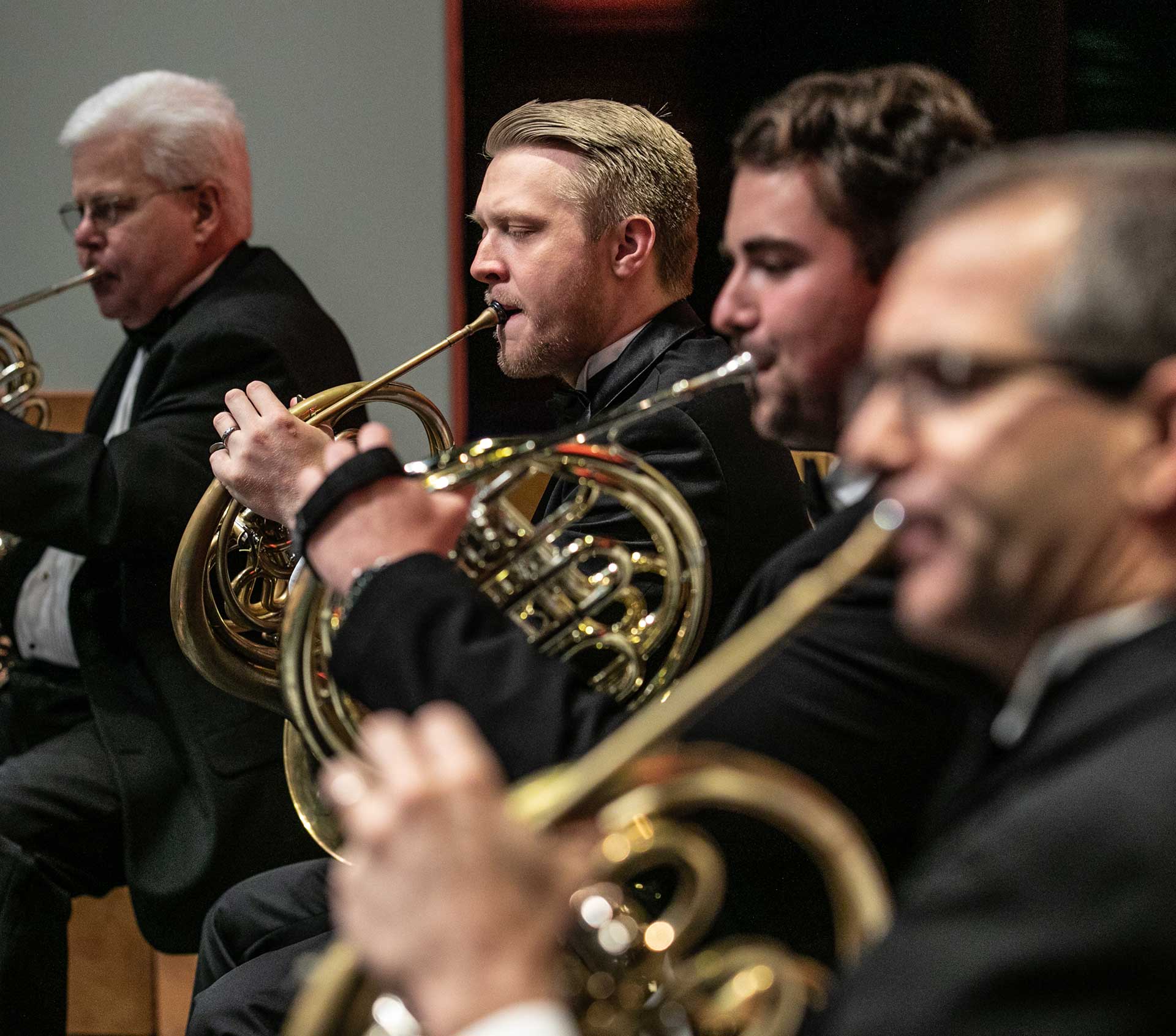
French Horn
Jason Eklund*
Eric Hawkins
Patrick Hydo
Cole McDonald
Scott Sappington
Trumpet
Yvonne Toll Schneider*
Michael Brown
Rachel Ragan
Stephen Wadsack
Trombone
Tavish Daly*
Jennifer Mitchell
Phil Truex
Bass Trombone
Steve Jessup
Tuba
Don Strand*
Greg Rowell
* denotes section principal
Piano
Jakari Rush
Harp
Julie Koenig*
Timpani
John Lawless *
The John and Linda Cooke Chair
Chair Percussion
Jeff Kershner*
Noah Burgess
Dakota Reeves
Greg Roman
Katie Ude
* denotes section principal
Musicians performing in orchestral productions are represented by the American Federation of Musicians of the United States and Canada.
Georgia Symphony Orchestra Chorus
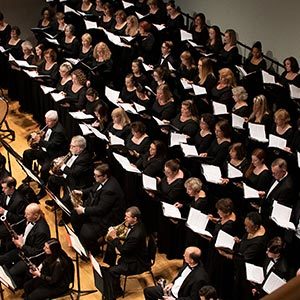
Encompassing a wide range of vocal versatility, the Georgia Symphony Orchestra Chorus performs choral/orchestral works, pops, and produces independent choral concerts. Highlights from recent seasons include choral masterworks with the Georgia Symphony, being featured on a GSO Jazz! performance at the Strand Theatre, singing in a sold-out concert of music from the video game “Zelda,” and presenting a historic regional premiere of American music.
Comprised of accomplished vocalists from the greater metropolitan area, performances have included Mahler’s Second Symphony, Vaughan Williams’ Sea Symphony, Orff’s Carmina Burana, Haydn’s Creation, and Verdi’s Te Deum. The ensemble has also presented state, regional, and world premieres.
Founded in 2007, and directed by Bryan Black, the chorus recently performed with the Morehouse College Glee Club, the Spelman College Glee Club, the Uzee Brown Society of Choraliers, and the Georgia Spiritual Ensemble.
Shana Adams
Wisdom Anderson
Lanie Baxter
Julia Bellezza
Heather Blalock
Cindy Bohn
Linda Bonstein
Crae Borsom
Ann Burkly
Atheleen Burley
Cailin Che
Gabrielle Clark
Beth Collier
Amber Connor
Leah Crumley
Gwen Ehrhardt
Camille Fairbanks Michaelyn Findley
Karen Gonzalez
Ann C Hixson
Nancy Hodges
Marianne Holdzkom
Marian Hull
Judy Feasel
Jones Amy LaPlume
Kathleen Laurendeau
Ashley Laverock
Stephanie Loomis
Katie Mattice
Margaret Menz
Mary Nimsgern
Virginia Osborne
Karen Partyka
Bliss Peterson
Amy Potter
Bwashena Qadhafi
Brenda Rhodes
Luci Roberts
Kim Sherk
Patty Smitherman
Tammy Teal
Leslie Thompson
Maria Velasquez
Christine Vick
Ann Vines
Janet Adams
Morgan Baker
Laura Blakeslee
Sara Branch
Glendel Browder
Ramona Burkett
Kamela Carlson
Karen Chin
Jennie Coar
Dr. Kecia Coar-Overall Andrea Davis
Tiffany Fannin
Kelly Francis
Lisa Greenwood
Judy Harvey
Rebecca Higgins
Deborah Holyfield
Peggy Hurst
Mary Hyde
Beth Johnson
Jennifer Kunz
Cynthia Landis
Erin Layton
Berna Levine
Suzanne Loo
Beverly Martin
Debra McCracken
Sharon Menear
Suzanne Milligan
Allison Nance
Linda Nordahl
Jacquelyn O’Bryan
Laura Searcy
Marian Sebel
Christine Shoemaker
Joan Shorr
Susan Traendly
Laurie Washington Meredtih Weber
Rose Whittingham
Martha Willis
James Banks
Steve Bennett
William Dyer
Johnny Gravley
Chris Greenwood
Dean Hawkinson
Scott Lamphere
John Love
Jimmie Nettles
Kevin Valery
Pyram Robert Shull
Josh Teal
Robert J Argent
Robert Bonstein
Charlie Champion
Dave Erstfeld
Gaylen Ferry
Joe Ferst
Aidan Fortenberry
Frank Harris
Ken Johnson
Wates Keller
Brian Loomis
Dave Lozada
Robert Mayfield
John Morgan
Oral Moses
Carter Ransom
Michael Reeves
Alberto Sapoznik
Al Searcy
Benjamin Wadsworth
Peter – Goose Weston
Harris Wheeler
Wally Ziprik

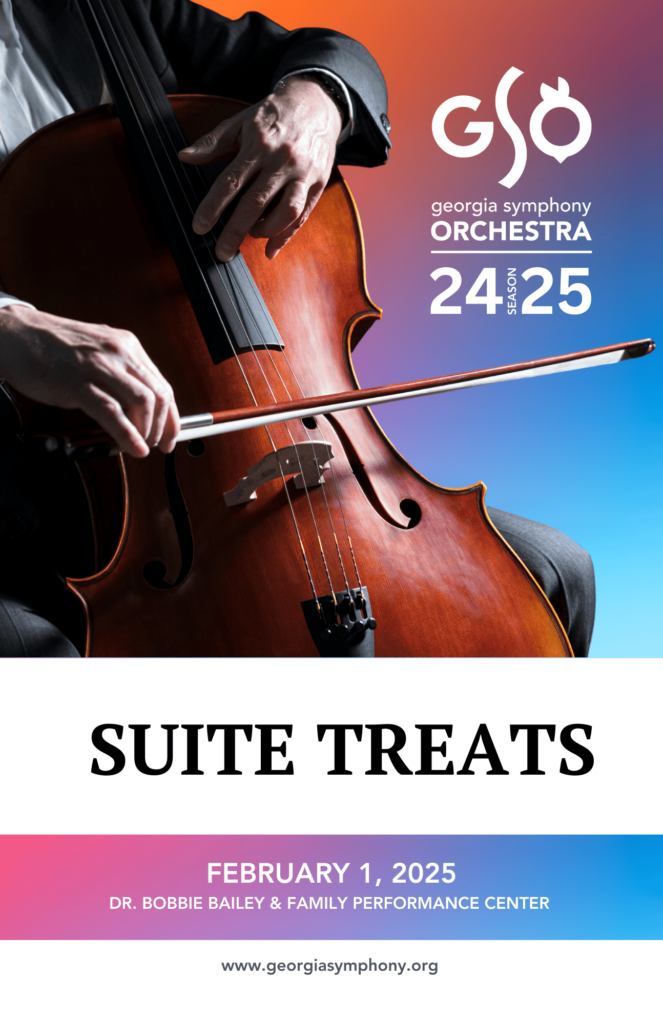
Suite Treats!
February 1, 2025
Dr. Bobbie Bailey & Family Performance Center
This program is made possible through the generosity of our sponsors.
Edvard Grieg
Peer Gynt Suite 1 (~ 5 minutes)
I. Morning Mood (~4 minutes)
II. Death of Åse (~4 minutes)
III. Anitra’s Dance (~4 minutes)
IV. In the Hall of the Mountain King (~3 minutes)
Pyotr Ilyich Tchaikovsky
Selections from Swan Lake Suite (~20 minutes)
No. 1. Scene (~3 minutes)
No. 2 Valse (~7 minutes)
No. 3 Danse des cygnes (~2 minutes)
No. 5 Danse éspagnole (~2 minutes)
Act IV Scene Finale (~6 minutes)
INTERMISSION (~15 minutes)
Samuel Coleridge-Taylor
Othello Suite (~13 minutes)
I. Dance (~2 minutes)
II. Children’s Intermezzo (~4 minutes)
III. Funeral March (~3 minutes)
IV. The “Willow Song” (~3 minutes)
V. Military March (~2 minutes)
John Williams
Star Wars Suite for Orchestra (~24 minutes)
I. Main Title (~5 minutes)
II. Princess Leia’s Theme (~5 minutes)
III. The Imperial March [Darth Vader’s Theme] (~3 minutes)
IV. Yoda’s Theme (~3 minutes)
V. Throne Room & End Title (~5 minutes)
Program Notes
Edvard Grieg, Peer Gynt Suite No. 1, Op. 46 (1875)
Few works in the Western classical repertory manage to combine timeless charm and profound cultural significance as effortlessly as Edvard Grieg’s Peer Gynt Suite No. 1. The suite, with its immediately recognizable melodies, has secured a firm place in concert halls worldwide and remains a quintessential expression of Norwegian Romantic nationalism. Though intended as incidental music for Henrik Ibsen’s play Peer Gynt, Grieg’s masterful orchestral vignettes transcend their theatrical origins to evoke universal emotions and picturesque imagery.
Commissioned by Ibsen in 1874, Grieg’s incidental music for Peer Gynt includes more than 20 individual numbers. Grieg later selected eight of these pieces for two suites, of which the first, Peer Gynt Suite No. 1, has become particularly beloved. Grieg’s relationship with Ibsen’s source material was, at times, ambivalent. The story—a folkloric yet satirical exploration of human ambition and folly—challenged Grieg to navigate between dramatic realism and fantastical surrealism. Nonetheless, his music fully captures the whimsical, poignant, and at times irreverent spirit of Ibsen’s narrative.
The four movements of the first suite exemplify Grieg’s extraordinary gift for melodic invention and vivid orchestral color:
1. Morning Mood (Morgenstemning)
One of the most iconic evocations of dawn in music history, *Morning Mood* opens with a lilting flute melody, delicately answered by the oboe, suggesting the gentle awakening of nature. Though many listeners associate this piece with serene Nordic landscapes, it was originally conceived to underscore a scene in the Sahara Desert. The universal appeal of the music, however, transcends its setting, portraying instead the quiet promise and infinite beauty of a new day.
2. The Death of Åse (Åses død)
This mournful movement depicts the passing of Åse, Peer Gynt’s beloved mother. Grieg’s setting is achingly simple—a somber theme unfolds slowly in the strings, heavy with grief yet profoundly human in its intimacy. Here, Grieg demonstrates his mastery of musical economy: restrained melodic lines and spare harmonies achieve devastating emotional depth.
3. Anitra’s Dance (Anitras dans)
Drawing upon exotic and playful elements, Anitra’s Dance portrays the seductive grace of Anitra, one of the women Peer encounters in his wandering adventures. Scored for strings and triangle, this delightful piece conveys a lilting, coquettish charm through a rhythmically infectious mazurka. Anitra’s spirited yet elusive character emerges in every gesture.
4. In the Hall of the Mountain King (I Dovregubbens hall)
Closing the suite is one of the most famous and electrifying orchestral crescendos ever penned. *In the Hall of the Mountain King* accompanies Peer’s fantastical (and increasingly perilous) visit to the underground court of the Troll King. The music begins with stealthy pizzicato strings and a creeping theme in the bassoons, gradually building in intensity and volume. Each repetition grows faster, culminating in a frenzied orchestral explosion—a thrilling depiction of Peer’s narrow escape. Though composed as programmatic underscore, this movement has taken on a life of its own as a paragon of musical storytelling.
Peer Gynt Suite No. 1 lasts approximately 15 minutes and demonstrates Grieg’s unique ability to translate literary imagery into symphonic form. It is no accident that Grieg’s music, particularly this suite, has resonated so strongly with audiences far removed from its Norwegian roots. It captures something universal: a celebration of life’s quiet joys, tender sorrows, playful diversions, and breathtaking adventures.
Pyotr Ilyich Tchaikovsky, Selections from Swan Lake, Op. 20
Few works capture the enduring magic and poignancy of ballet quite like Pyotr Ilyich Tchaikovsky’s Swan Lake. Composed in 1875–76, the score marked a significant departure from the conventional dance music of its day, elevating the art form through a sweeping narrative, symphonic scope, and unforgettable melodies. While the ballet’s initial premiere in 1877 met with a lukewarm reception, it found posthumous acclaim in 1895, thanks to the celebrated revival choreographed by Marius Petipa and Lev Ivanov. Today, Swan Lake is an undisputed cornerstone of both the ballet and orchestral repertoires.
The selections presented here highlight the emotional range and sheer elegance of Tchaikovsky’s musical storytelling, offering glimpses of Swan Lake’s fairy tale world. The drama is anchored by the tale of Prince Siegfried, his love for the enchanted Swan Queen Odette, and the malevolent forces that conspire against their union. Yet, within this narrative arc, Tchaikovsky’s music extends far beyond the stage, reaching timeless realms of beauty and imagination.
1. Scene (Act II)
The Scene introduces the heart of the ballet’s poignant love story and is among its most instantly recognizable moments. Tchaikovsky’s yearning main theme, played by the strings and underscored by the shimmering harp, evokes the hauntingly tender image of Odette and her fellow swan maidens, cursed to take their avian forms by day. This melody, as exquisite as it is sorrowful, has become the emotional cornerstone of the entire ballet—a symbol of hope intertwined with tragedy.
2. Valse (Act I)
Tchaikovsky’s mastery of the waltz is on full display in this elegant piece, which accompanies a festive court scene early in the ballet. Lightly cascading strings and buoyant woodwinds create a sense of exuberance and regal splendor. The Valse serves as a backdrop for dancers weaving intricate patterns, but its effervescent charm also resonates as pure music, capturing the vibrancy and grace of 19th-century ballroom traditions.
3. Danse des Cygnes (Dance of the Swans, Act II)
One of the ballet’s most iconic moments, the Danse des Cygnes showcases Tchaikovsky’s ability to merge delicate precision with dramatic sweep. The brisk, staccato figures—most famously articulated in the fluttering strings—mirror the swans’ elegance and synchronized movement. This is ballet music at its most pristine: radiant in simplicity yet deeply evocative, a hallmark of Tchaikovsky’s genius.
6. Danse Espagnole (Spanish Dance, Act III)
A dazzling burst of exotic flair, the Danse Espagnole provides a thrilling change of pace within the ballet’s Act III festivities. Drawing on the fiery rhythms and vibrant colors associated with Spanish music, Tchaikovsky incorporates bold, percussive gestures and dramatic orchestration to evoke an atmosphere of high-energy celebration. This dance serves as both a visual and auditory feast, underscoring the diversity of styles within the ballet.
Finale (Act IV)
The emotional core of Swan Lake culminates in its devastating Finale, which shifts from the darkness of betrayal to the radiant transcendence of love’s ultimate sacrifice. Tchaikovsky builds a symphonic narrative of anguish and redemption, blending urgent string figures, soaring melodies, and powerful brass exclamations. The ending, whether tragic or triumphant, depends on the production—but the music always leaves an indelible impression of grandeur and depth.
Tchaikovsky’s Swan Lake stands as a testament to the transformative power of music, blending human emotion with fantastical imagery in ways that resonate across time and culture. In this selection of excerpts, listeners are transported into a world where every note is imbued with elegance, passion, and timeless beauty.
Samuel Coleridge-Taylor, Othello Suite, Op. 79
In the hands of Samuel Coleridge-Taylor (1875–1912), the music of the Romantic era found a voice of profound lyricism and bold originality. Born in London to a Sierra Leonean father and an English mother, Coleridge-Taylor carved a unique path in the musical world, navigating both cultural and artistic landscapes with grace and ingenuity. Though widely celebrated during his lifetime—especially for his choral masterpiece Hiawatha’s Wedding Feast—his orchestral works, such as the Othello Suite, reveal a remarkable ability to distill theatrical drama into purely musical form.
The Othello Suite, composed in 1911, originated as incidental music for a production of Shakespeare’s tragedy. Coleridge-Taylor’s score does more than merely accompany the action; it captures the emotional essence of the play, rendering the characters and themes with striking clarity. His talent for melody, harmonic sophistication, and rhythmic drive imbues the suite with both dramatic intensity and poetic nuance.
1. Prelude
The Prelude sets a tone of foreboding and grandeur. Noble, weighty chords in the brass and strings evoke the tragic gravitas of Shakespeare’s tale, while moments of soaring lyricism hint at the deep emotional entanglements at play. Coleridge-Taylor deftly establishes an atmosphere of tension, foreshadowing the passion and betrayal that lie at the story’s core.
2. Children’s Intermezzo
In stark contrast to the weighty Prelude, the Children’s Intermezzo offers a moment of playful levity. Bright, skipping rhythms and light-hearted woodwind melodies create a delightful vignette, a brief but vivid escape from the unfolding drama. It showcases Coleridge-Taylor’s capacity for charm and his instinct for crafting music that dances with innocence and joy.
3. Military March
Martial and resolute, the Military March reflects the martial undercurrents of Othello. Bold fanfares and crisp rhythmic patterns dominate the texture, while vigorous interplay between the brass and percussion drives the music forward. Yet within its proud exterior, subtle harmonic shifts suggest the undercurrents of conflict and unease that ripple through the story.
4. Willow Song
The Willow Song stands as the emotional heart of the suite. Coleridge-Taylor crafts a plaintive setting of Desdemona’s melancholic tune, its aching beauty conveyed through expressive woodwind solos and tender string accompaniment. The haunting melody, which foreshadows her tragic fate, unfolds with a restrained eloquence that magnifies its poignancy.
5. Dance
The Dance brings the suite to a rousing conclusion, weaving energy and elegance into a vivacious finale. With its rhythmic vigor and sparkling orchestrations, this movement serves as a dramatic counterbalance to the previous pathos, suggesting a sense of resilience amidst tragedy. Its spirited momentum leaves an indelible impression of vitality, even as it nods to the story’s darker themes.
Coleridge-Taylor’s Othello Suite offers a masterclass in translating Shakespearean drama into music, combining emotional depth and orchestral color with profound empathy for the narrative. Each movement stands as both an evocative tableau and part of a cohesive whole, reaffirming Coleridge-Taylor’s legacy as a composer whose work resonates with clarity, passion, and enduring artistic insight.
John Williams, Star Wars Suite
Few soundtracks have permeated the cultural consciousness as thoroughly as John Williams’ iconic score for Star Wars. Since the 1977 release of the original film—later subtitled Episode IV: A New Hope —Williams’ music has become inseparable from George Lucas’s saga of rebellion, heroism, and the eternal struggle between light and dark. The Star Wars Suite, derived from thematic highlights across the series, distills Williams’ sweeping score into a concert masterpiece, blending dazzling orchestration with deeply resonant themes.
At its core, Williams’ Star Wars music draws from the classical idiom of 19th-century Romanticism, channeling Wagnerian leitmotifs, Tchaikovskian grandeur, and Korngoldian cinematic flair. The result is a series of unforgettable musical portraits that speak directly to our emotions while propelling the narrative epic.
1. Main Title
The Main Title fanfare, which opens every Star Wars film, is arguably one of the most recognizable musical themes of all time. Heroic brass and driving strings exude unbridled optimism and adventure, capturing the essence of Luke Skywalker’s journey and the spirit of the galaxy-spanning saga. Propulsive and triumphant, this opening declares the arrival of an epic story unfolding on a truly cosmic scale.
2. Princess Leia’s Theme
Tender and lyrical, Princess Leia’s Theme paints an elegant musical portrait of the saga’s steadfast heroine. Soaring strings and delicate harp accompany the heartfelt melody, radiating both Leia’s grace and her inner strength. Williams imbues this theme with a bittersweet quality, echoing the character’s vulnerability and the sacrifices she makes in her unyielding fight for the greater good.
3. The Imperial March
Powerful and ominous, The Imperial March is one of the most indelible villain themes in cinematic history. The foreboding minor-key motif thunders with relentless determination, its martial rhythms and heavy brass conjuring the might and menace of the Galactic Empire. This iconic music accompanies the formidable presence of Darth Vader, embodying his complex mix of terror, tragedy, and destiny.
4. Yoda’s Theme
Gentle yet profound, Yoda’s Theme captures the wisdom and mystery of the beloved Jedi Master. With a warm, reflective melody carried by strings and woodwinds, Williams evokes the sense of spiritual depth and quiet strength that defines Yoda. The theme unfolds like an otherworldly lullaby, weaving a meditative respite into the suite’s dramatic narrative.
5. Throne Room and End Title
The suite concludes with Throne Room and End Title, a triumphant finale that brings the saga full circle. Drawing on the regal splendor of the original trilogy’s ceremonial climax, Williams crafts an orchestral tapestry bursting with grandeur. Fanfares, noble strings, and an uplifting reprise of the Main Title encapsulate the themes of hope and victory, closing with a resounding affirmation of the saga’s enduring spirit.
John Williams’ Star Wars Suite not only serves as a thrilling concert piece but also as a testament to the enduring power of music to evoke emotion, tell stories, and inspire imagination. With its intricate melodies, bold orchestrations, and unforgettable character themes, Williams’ work continues to transport audiences to a galaxy far, far away—cementing its place as a cornerstone of film music and a universal cultural touchstone.