

Program Notes - American Tapestry
James Stephenson: Fanfare for Democracy
Contemporary American composer James Stephenson (b. 1969) states that he composed the Fanfare for Democracy on a single day in November of 2020. A short (approx. 3 minutes) and rhythmically-vigorous oration for brass and percussion, the Fanfare received its premiere at the United States Capitol on January 20, 2021, at the inauguration of President Joe Biden and Vice-President Kamala Harris, performed by “The President’s Own” United States Marine Band. The piece presents a stirring opening to our all-American program.
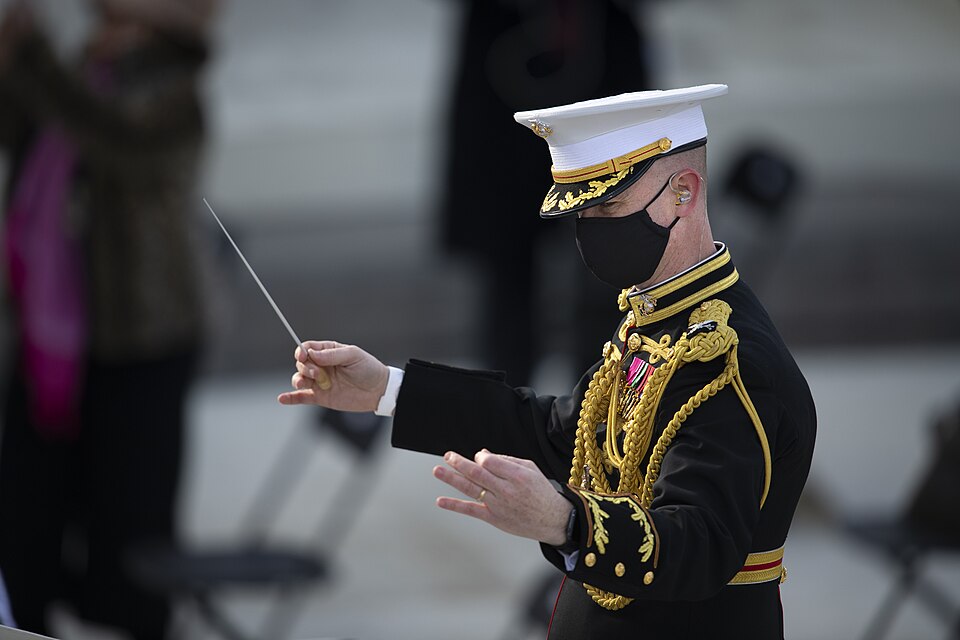
“The President’s Own” United States Marine Band performs at the 59th Presidential Inauguration on January 20, 2021, where James Stephenson’s Fanfare for Democracy received its premiere. Photo credit: Carlos M. Vazquez II / Office of the Chairman of the Joint Chiefs of Staff, CC BY 2.0.
Joan Tower: Made in America
Joan Tower (b. 1938) is a significant figure in contemporary American composition, with works spanning every important composition genre with the exception of opera. Made in America consists of a single movement for full orchestra of around 14 minutes’ duration and premiered in October of 2005. A recording of the work by the Nashville Symphony Orchestra conducted by Leonard Slatkin won the 2008 Grammy Award for Best Classical Contemporary Composition.
Concerning this work, Tower wrote, “When I started composing this piece, the song “America the Beautiful” kept coming into my consciousness and eventually became the main theme for the work. The beauty of the song is undeniable and I loved working with it as a musical idea. One can never take for granted, however, the strength of a musical idea — as Beethoven (one of my strongest influences) knew so well. This theme is challenged by other more aggressive and dissonant ideas that keep interrupting, unsettling it, but “America the Beautiful” keeps resurfacing in different guises (some small and tender, others big and magnanimous), as if to say, “I’m still here, ever changing, but holding my own.” A musical struggle is heard throughout the work. Perhaps it was my unconscious reacting to the challenge of how do we keep America beautiful?”
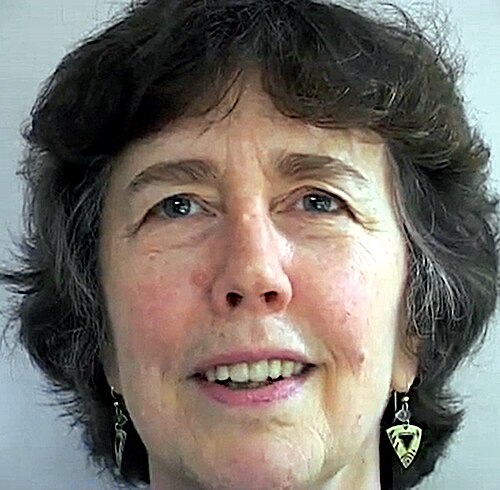
Composer Joan Tower, whose Made in America draws inspiration from “America the Beautiful.” Photo credit: George Quasha / Wikimedia Commons, CC BY 3.0.
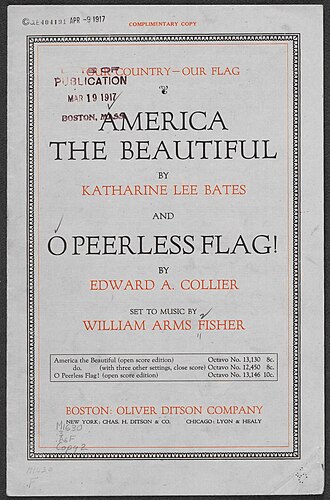
A 1917 edition of “America the Beautiful,” the melody that became the central musical idea in Joan Tower’s Made in America. Photo credit: Library of Congress / Wikimedia Commons, Public Domain.
Leonard Bernstein: Symphonic Dances from West Side Story
A child of the Jazz Age, Leonard Bernstein (1918-1990) grafted George Gershwin’s Russian immigrant roots onto Cole Porter’s Ivy League education. His protean career developed very quickly: his famous debut conducting the New York Philharmonic on short notice in a nationally broadcast concert in November 1943 was followed the next year by the premieres of his First Symphony (“Jeremiah”) with the Pittsburgh Symphony; his ballet Fancy Free, choreographed by Jerome Robbins, at the Metropolitan Opera; and his Broadway musical On the Town.
In 1955-57, Bernstein wrote the musical West Side Story, the work that would ensure his fame as a composer. Then—after a New York run of almost two years (772 performances) and a national tour—in the opening weeks of 1960, Bernstein revisited his score for West Side Story and extracted nine sections to assemble into the Symphonic Dances, a work for full orchestra lasting around 24 minutes. They premiered at a “Valentine for Leonard Bernstein” gala concert by the New York Philharmonic (a fundraiser for the orchestra’s pension fund) under Lukas Foss’s direction, on February 13, 1961.
The stylistic diversity within the Symphonic Dances is partially created by the juxtaposition of classical techniques (fugue, etc.) with dance rhythms and jazz syncopations. However, the essence of the entire score is that most prominent opening melodic figure of “Maria” (C-F sharp-G), with its characteristic tritone interval. The suite ends, like the musical itself, on edge, with an evocative chord containing the same interval.
The crucial role of dance in West Side Story added to the challenge of adapting the music for the concert platform. The orchestrations call for vibrant instrumental combinations and a huge percussion section (not to mention the vocal talents of the orchestra members!) to enhance the kinetic quality of the rhythms. More deeply, they tilt the narrative weight from a love story to gang conflict. We hear first the rivalry between the Jets and the Sharks, then the utopian opposite; their juxtaposition creates a dramatic tension that shapes the entire work. The printed score includes the following descriptions:
Prologue (Allegro moderato)—The growing rivalry between two teenage street gangs, the Jets and Sharks.
“Somewhere” (Adagio)—In a visionary dance sequence, the two gangs are united in friendship.
Scherzo (Vivace e leggiero)—In the same dream, they break through the city walls and suddenly find themselves in a world of space, air, and sun.
Mambo (Meno presto)—Reality again; competitive dance between the gangs.
Cha-cha (Andantino con grazia)—The star-crossed lovers [Tony and Maria] see each other for the first time and dance together.
Meeting Scene (Meno mosso)—Music accompanies their first spoken words.
Cool Fugue (Allegretto)—An elaborate dance sequence in which the Jets practice controlling their hostility.
Rumble (Molto allegro)—Climactic gang battle during which the two gang leaders are killed.
Finale (Adagio)—Love music developing into a procession, which recalls, in tragic reality, the vision of “Somewhere.”
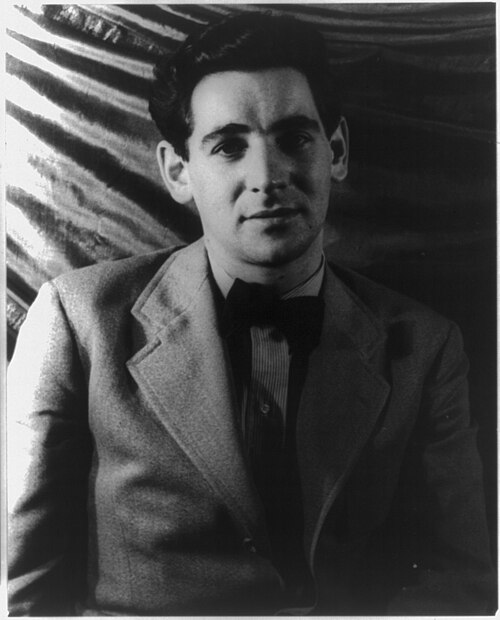
1944 portrait of Leonard Bernstein
Photo credit: Carl Van Vechten/Wikimedia Commons, Public Domain
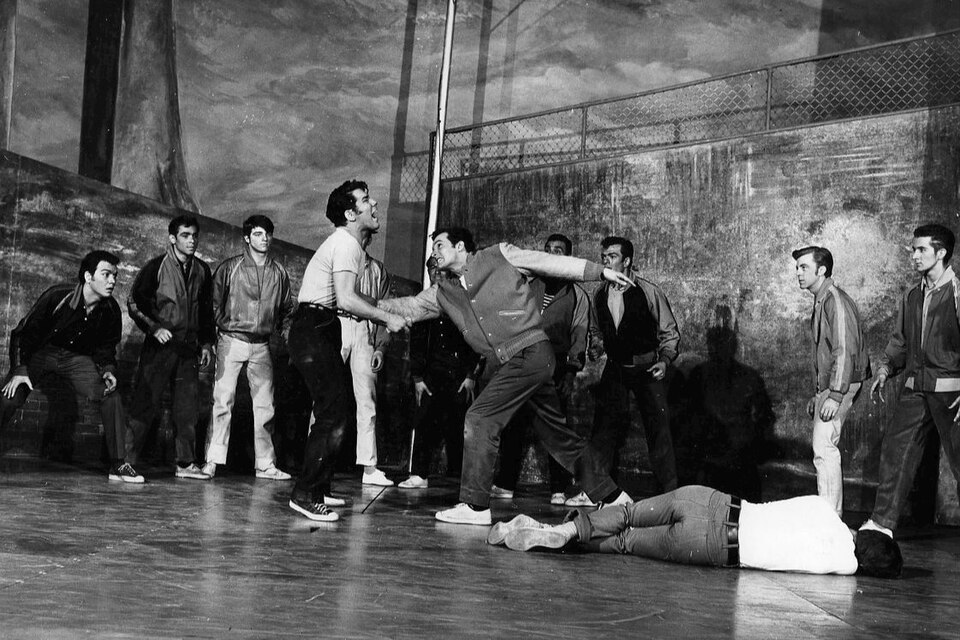
“The Rumble” from the original 1957 Broadway production of West Side Story. Bernstein later incorporated this climactic gang confrontation into the Symphonic Dances from West Side Story. Photo credit: Fred Fehl / Wikimedia Commons, Public Domain.
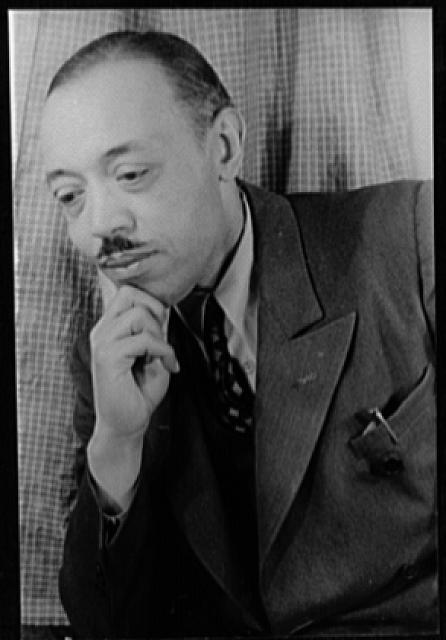
Composer William Grant Still, often called the “Dean” of African-American composers, won the Cincinnati Symphony Orchestra’s 1944 Jubilee Prize for Festive Overture. Photo credit: Carl Van Vechten / Library of Congress, Public Domain.
William Grant Still: Festive Overture
In December of 1944, William Grant Still (1895-1978) won the Cincinnati Symphony Orchestra’s Jubilee Prize and a $1,000 War Bond for “Best Overture” in a nationwide competition in celebration of the Orchestra’s 50th anniversary. More than 39 American composers submitted works, but the judges—Eugene Goossens, then-Music Director at Cincinnati; Pierre Monteux, San Francisco Symphony conductor; and Deems Taylor, noted New York composer, critic and writer—voted unanimously for Still, often referred to as “the Dean” of African-American composers. Unaware of the contestants’ identities until after the prize-winning work was selected, the judges were thrilled that the winner happened to be one of the most distinguished American composers of the time.
Still, born in Woodville, Mississippi, in May 1895, was the recipient of two Guggenheim Fellowships and composed orchestral and chamber music as well as operas and ballets. His most notable work at the time of winning the Jubilee Prize, Afro-American Symphony, was performed across Europe and the United States. Among his other achievements, he was the first African American to receive European recognition through performance of his music (on a tour organized by Howard Hanson, director of the Eastman School of Music); his Symphony in G Minor was presented in New York (1937) and conducted by Leopold Stokowski, who had been Music Director of the Cincinnati Symphony Orchestra from 1907 to 1909; and he was commissioned to write a symphony for the New York World’s Fair in 1938.
The CSO gave the world premiere of Festive Overture a month after naming Still the winner, and the composition was received warmly. “The prize-winning composition…which was written and scored in the space of a few weeks, has a definite American flavor,” Goossens said in the program notes. “It bespeaks the pride of the composer in his native land, the warmth of the American people, and the grandeur of Scenic America.”
Valerie Coleman: Seven O’Clock Shout
We continue with another short (around 5 minutes) and vigorous work by a contemporary flutist and composer, Valerie Coleman (b. 1970). About this work, the composer writes,
“Seven O’Clock Shout is an anthem inspired by the tireless frontline workers during the Covid-19 pandemic, and the heartwarming ritual of evening serenades that brings people together amidst isolation to celebrate life and the sacrifices of heroes. The work begins with a distant and solitary solo between two trumpets in fanfare fashion to commemorate the isolation forced upon human kind, and the need to reach out to one another. The fanfare blossoms into a lushly dense landscape of nature, symbolizing both the caregiving acts of nurses and doctors as they try to save lives, while nature is transforming and healing herself during a time of self-isolation.
When a composer has the rare opportunity to create for musicians they have gotten to know, the act of composing becomes an embrace tailored to the personality and capabilities of the musicians with elements of both challenge and appreciation. One such moment is dedicated to humanity and grace, as a clarinet solo written for Ricardo Morales, followed by a flute solo with both Jeffrey Khaner and Patrick Williams in mind, providing a transition into a new upbeat segment. Later, to continue tradition from the first commission the composer received from the orchestra, a piccolo solo dedicated to Erica Peel dances with joy.
It was suggested that a short work for a debut by multi-track recording could account for the ensemble performing together as if they were in the same room. One of the devices used to address this is the usage of Ostinato, which is a rhythmic motif that repeats itself to generate forward motion and in this case, groove. The ostinato patterns here are laid down by the bass section, allowing the English horn and strings to float over it, gradually building up to that moment at 7pm, when cheers, claps, clangings of pots and pans, and shouts ring through the air of cities around the world! The trumpets drive a infectious rhythm, layered with a traditional Son clave rhythm, while solo trombone boldly rings out an anthem within a traditional African call and response style. The entire orchestra ‘shouts’ back in response and the entire ensemble rallies into an anthem that embodies the struggles and triumph of humanity. The work ends in a proud anthem moment where we all come together with grateful hearts to acknowledge that we have survived yet another day.”
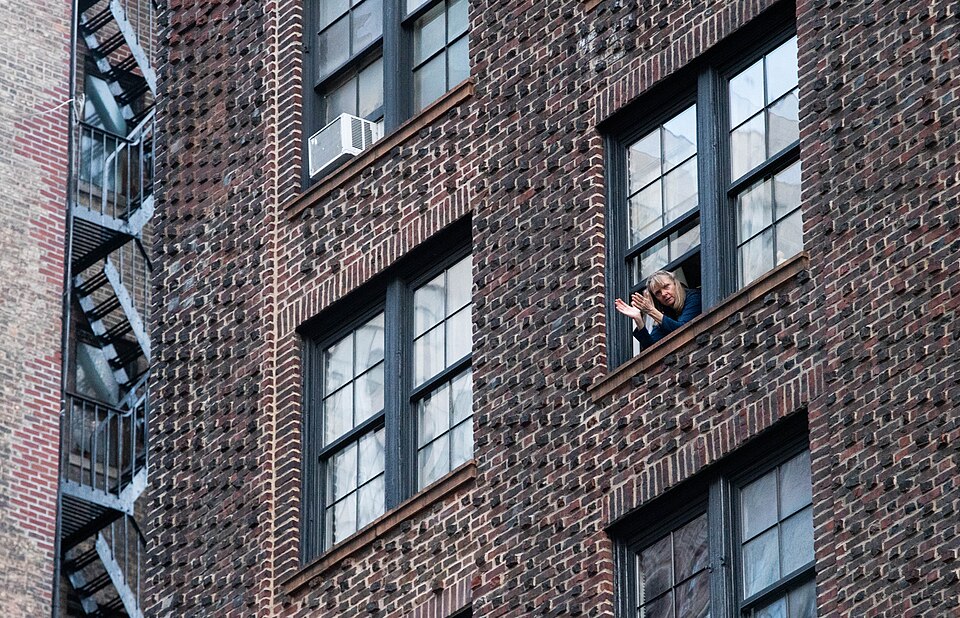
New Yorkers applaud healthcare workers during the COVID-19 pandemic. The nightly ritual of cheers, clapping, pots and pans, and shouts helped inspire Valerie Coleman’s Seven O’Clock Shout. Photo credit: Anthony Quintano / Wikimedia Commons, CC BY 2.0.
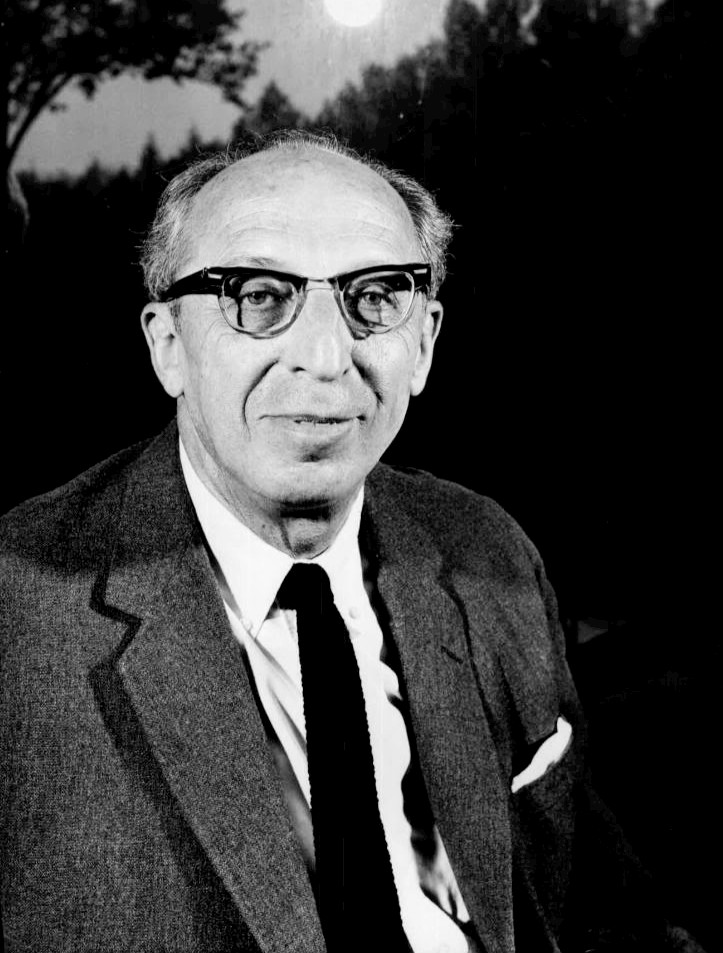
Composer Aaron Copland, whose Lincoln Portrait uses both original music and American folk material to frame the words and character of Abraham Lincoln. Photo credit: CBS Television / Wikimedia Commons, Public Domain.
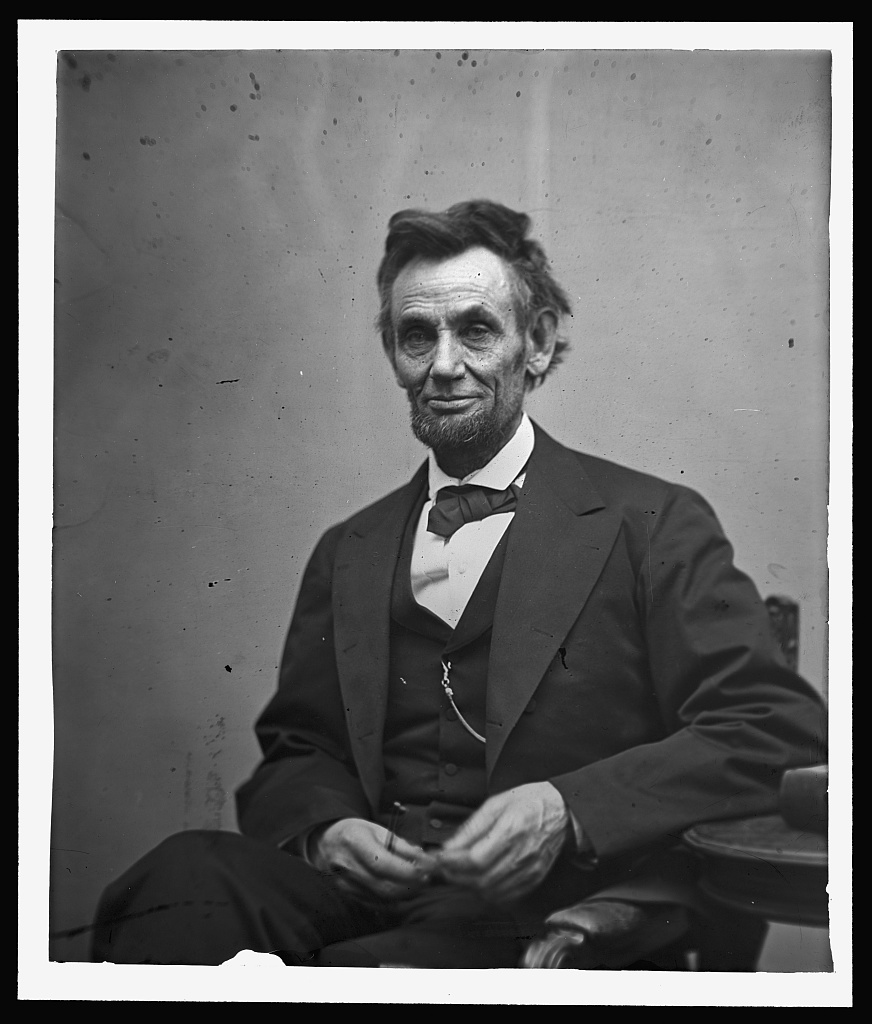
Abraham Lincoln, photographed by Alexander Gardner on February 5, 1865. Copland described his goal in Lincoln Portrait as creating a musical frame for Lincoln’s words and spirit. Photo credit: Alexander Gardner / Library of Congress, Public Domain.
Aaron Copland: Lincoln Portrait
When commissioned by conductor André Kostelanetz during World War II to compose a portrait of an eminent American, to express the “magnificent spirit of our country,” Aaron Copland (1900-1990) selected Abraham Lincoln as his subject. Although the choice may seem to us virtually inevitable, the fact is his first selection had been Walt Whitman. It was when Kostelanetz persuaded him that a political figure of world stature would be better suited to the patriotic purpose that Copland settled upon Lincoln.
In 1942, the year of Lincoln Portrait, Copland had already turned the corner from his path of neoclassical abstraction onto what became a highway of Americana, filled with works in which folk materials were freely used and adapted. By no means content only to appropriate traditional tunes, Copland blended them with a full complement of original music that marvelously counterfeited the genuine article, and the combined ingredients came out of his American Cuisinart mixed with the extremely palatable spices of jaunty, irregular rhythms, spiky dissonances, as well as simple triadic harmonies, intimate and/or grand orchestral textures – and gallons of spirit.
Of Copland’s compositions in the American style that have endeared themselves to a large public, Lincoln Portrait may be the one that has touched most deeply the American consciousness. The work was premiered by Kostelanetz and the Cincinnati Symphony on May 14, 1942, and a radio broadcast with Carl Sandburg as narrator came shortly thereafter.
The following note was written by Copland for the first Boston Symphony performance in 1943:
“The first sketches were made in February, and the portrait finished on 16 April 1942. I worked with musical materials of my own with the exception of two songs of the period: the famous ‘Camptown Races’ which, when used by Lincoln supporters during his Presidential campaign of 1860, was sung to the words, ‘We’re bound to work all night, bound to work all day. I’ll bet my money on the Lincoln hoss…,’ and a ballad that was first published in 1840 under the title ‘The Pesky Sarpent,’ but it is better known today as ‘Springfield Mountain.’ In neither case is the treatment a literal one. The tunes are used freely in the manner of my use of cowboy songs in Billy the Kid.
The composition is roughly divided into three main sections. In the opening section I wanted to suggest something of the mysterious sense of fatality that surrounds Lincoln’s personality. Also, near the end of that section, something of his gentleness and simplicity of spirit. The quick middle section briefly sketches in the background of the times he lived. This merges into the concluding section where my sole purpose was to draw a simple but impressive frame about the words of Lincoln himself.”
Program Note by Jeffrey L. Tucker